



• Threatens To Prosecute Uncooperative Banks
Ahead of the 2023 general election timetable, the Independent National Electoral Commission (INEC) is to beam its searchlight on politicians and political parties in a bid to track the sources of funds for their campaigns.
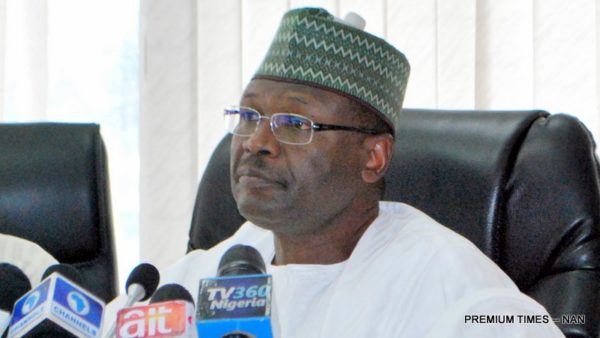
According to Yakubu, the commission will set up teams to monitor election spending ahead of the polls.
Represented by Prof. Ajayi Kunle, who is INEC’s National Commissioner in charge of the party monitoring committee, the INEC boss said the electoral empire would also monitor the movement of money on election days to tackle vote-buying at polling units.
When asked about the legal implications of the move, the INEC boss explained that the Electoral Act and the constitution empower INEC to make any other regulations that will assist its efficiency.
“As long as we have not notified anybody that the race to the 2023 general election has started, we are not unaware of what anybody is doing. We follow the law strictly.
“Every candidate must be made to declare his bank asset. That is where they draw out their money, so we will make them present their statement of account right from the onset. We will make it mandatory for them to turn in their bank statement so that if they say they are doing billboard and the account remains the same, then there is a problem,” Yakubu said.
On the issue of vote-buying, the INEC chairman said: “We are going to establish finance monitoring teams and they will be among the electorate but they (politicians and political parties) won’t know. We are going to do it in a way that the influence of money will be reduced because we want to make the electoral field a level playing ground for both rich and poor candidates and the electorate. Everybody will go on an equal economic level so that you won’t influence the voting pattern”.
Immediate past Chairman of INEC, Prof. Attahiru Jega, identified lack of accountability and transparency in political campaign financing as key factors responsible for some challenges facing Nigeria’s electoral system.
“If we insist on accountability, then you can begin to somehow sanitise the way political parties raise funds. I think what has happened is that we paid too much attention to the issue of electronic transmission of results, and somehow they quickly passed the sections about raising the threshold. The civil societies did not pay much attention in their advocacy against this particular issue.
Earlier, the National Chairman of Inter-Party Advisory Council (IPAC), Yabagi Sani, called for strict enforcement of the regulations on election funding so as to prevent monetisation of the electoral process and improve the level of trust between the electorate and political party candidates.
He said that failure to do so could debase the voting process to the level of what he described as “a commodity for the highest bidder”.
To him, while the controversial Electoral Amendment Bill (2020), if eventually assented to by President Muhammadu Buhari, will usher in the upgrading of what a presidential candidate can spend at elections from N1billion to N5billion, representing a 400 per cent increment amongst others, there is need for its enforcement to ensure compliance with the provisions of the law on political campaign finance.
“However, political actors and commentators have been complaining that the new ceilings imply the monetisation of the election process beyond the low-income groups in spite of their other qualifications. In this context, it is feared that women, youths and people living with disabilities will be the most excluded from the political process and governance.”
