



• NUPRC dilly-dallies on NGFCP as payment by investors
• Oil companies emit 65.9 million CO2, flare 1.2 trillion cubic feet of gas in four years
• Four-year flare enough to generate 128,500GWh electricity
• Faring reduces life expectancy to 41yrs in N’Delta, says Bassey
• Stakeholders worry over weak regulation
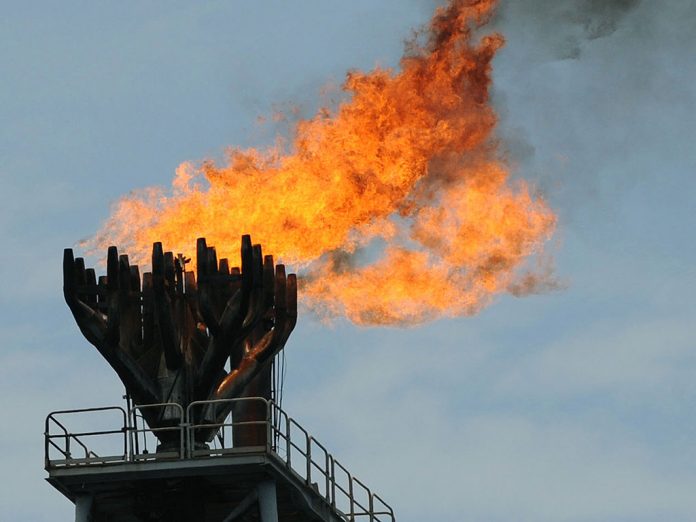
Nigerian National Petroleum Company Limited (NNPCL), Shell, ExxonMobil, Chevron, Total and other oil companies operating in the country flared about $3.9 billion (about N3 trillion) worth of gas in the last four years, despite growing environmental concerns and revenue leakages in the nation’s petroleum industry.
Although the companies pledged commitment to environmental sustainability and climate change, their operations have left Nigeria with 1.2 trillion standard cubic feet of gas with expected carbon dioxide emissions of 65.9 million tonnes.
At a time when the government is borrowing at least N11 trillion to fund the 2023 budget, the gas flare alone, if monetised, could provide almost 30 per cent of the needed budget.
With many elusive targets to end gas flaring in the Niger Delta, statistics provided by the National Oil Spill Detection and Response Agency (NOSDRA) and the Gas Flaring Tracker satellite of the World Bank puts the volume of gas flared in 2022 at 224.9 billion standard cubic feet (SCF), which translates to $787.2 million The gas flared in 2021 was 260.3 billion SCF, which translates to about $911 million; in 2020, 260 billion cubic feet of gas was flared, which was about $909 million. In 2019, 466 bscf of gas was flared, translating to about $1.7 billion.
The gas flared by the companies in four years is equivalent to about 128,500 gigawatts of electricity in a country that is struggling with gas to power about 80 per cent of electricity generation plants. In 2022, the worth of gas flared could generate 22,500 gigawatts hour of electricity (GWh).
Coming at a time the Federal Government is championing a decade of gas, National Gas Expansion Programme (NGEP), auto-gas policy, zero gas flare target and others, Nigeria’s gas flare, though reducing slowly, fails to hit projected targets on the backdrop of poor infrastructure and funding despite the leeway in the Petroleum Industry Act (PIA).
Besides, concerns are rising that most operators are under-reporting gas flare figures to evade fines after the country’s latest regulations changed the penalty for gas flaring to $2 per 1,000 standard cubic feet of gas.
Nigeria has the largest gas reserves in Africa, hovering around 209 trillion standard cubic feet. The ‘2022 Global Gas Flaring Tracker Report’ of the World Bank showed that Nigeria ranked seventh on the list of top 10 countries involved in gas flaring in 2021. Combined with the pollution from oil production, the World Bank estimated that around two million people in Nigeria live less than four kilometres away from a flare site, a development which poses danger to their lives, especially those of children. Many attempts to bridge the gap in flaring over the years have been elusive as pronouncements by government officials and policymakers are often not taken seriously.
While the new regulations changed the penalty for gas flaring to $2 per 1,000 standard cubic feet of gas, discrepancies immediately surfaced between the official figure, which is self-reporting and the figures coming from the World Bank-supported Gas Flare Tracker (GFT).
The World Bank satellite observations come from the Visible Infrared Imaging Radiometer Suite (VIIRS) Nightfire aboard the Suomi satellite and was launched in Nigeria in 2012.
It was thereafter handed over to the National Oil Spill Detection and Response Agency and the Nigerian Ministry of Environment. The satellite-generated data is reportedly safe from manipulation as it collects information on gas flares in oil fields across Nigeria every 24 hours, and sums them up every month.
The Guardian had earlier reported that between 2018 and 2021, as much as 692 billion standard cubic feet of gas was not reported by the oil companies. Hence, the companies may have succeeded in evading $1.384 billion in penalties.
While initially targeting to end gas flaring in 2020, Nigeria launched the gas flare commercialisation programme in December 2016 after approval by the Federal Executive Council (FEC). About 45 out of 178 gas flaring sites in the country were identified for award to successful bidders. The Federal government had shortlisted 200 bidders from 800 bids to compete for the 45 flare sites, noting that other flare sites were coming on board. Reportedly, each of the bidders paid about $30,000, amounting to about $24 million but the programme remained a mirage since then.
Last year, the Nigerian Upstream Petroleum Regulatory Commission (NUPRC) relaunched the programme and promised the bidders succour, a check by The Guardian on the https://ngfcp.nuprc.gov.ng portal, yesterday, showed the picture of the former President Muhammadu Buhari, who left office about a month ago and that of former Minister of State for Petroleum, Timipre Sylva, who left office about four months ago to contest for governorship in Bayelsa.
Director, Health of Mother Earth Foundation (HOMEF), Nnimmo Bassey, described continuous flaring of gas as irresponsible exploitation of natural resources with colonial roots.
“Is it surprising that the production cost of a barrel of oil in Nigeria is one of the highest in the world? The production costs go to the producers. The JVs share the profit. Gas flaring fines are paid by the JV partners. Do you see the perversity in the arrangement? The government can’t come down hard on the companies. They are inextricably connected in the business,” he said.
According to him, routine gas flaring has continued unabated as a direct act of poisoning both the people and the environment to aid the accumulation of capital by the oil companies at the pleasure of the oil companies.
“A series of deadlines for ending the unconstitutional act (denying our people the right to life and a safe environment) has come and gone because of the incestuous relationship between the government and the oil companies on the one hand, and the fact that the major concern of the companies is profit-making. There is no obvious care about the fact that our people are killed by the toxic flaring and the global climate is compromised,” he stated.
Bassey said gas flaring kept life expectancy in the oil-producing region at 41 years, adding that the new government must immediately bring an end to the situation.
He said the government must respect the right to life of the people and end routine gas flaring, stressing that the menace is a devious version of oil thievery and a flagrant act of poisoning.
“It is an unconscionable act of pollution and one of the reasons that life expectancy in the Niger Delta stands at a minuscule 41 years. Making the penalty of flaring higher than the commercial value of the gas would still not bring any sense of justice for the health hazards that our people are exposed to. Money cannot replace life,” Bassey stated.
Former President of Movement for the Survival of the Ogoni People (MOSOP), Ledum Mitee, said weak regulatory agencies and the relationship between oil companies as well as the lack of power will keep gas flaring in the Niger Delta.
Oil comes either alone or with gas; when the gas is associated with oil, the oil companies do not want to expend resources to separate both and instead opt for the non-associated gas in the LNG projects and flare up the associated gas.
Our government instead of compelling them to do the needful is content with the companies resorting to flaring the gas and then charging a token fine to the government,” Mitee said.
According to him, the government appropriates the fine for poisoning the people who daily breathe the toxic gasses and leave the people to die. He said there is a need to force the companies to harvest the associated gas for use both domestically or export, adding all so-called fines collected should be paid into a health trust fund for the benefit of the victims of gas pollution.
An energy economist and professor at the University of Ibadan, Adeola Adenikinju, said apart from the huge environmental problem caused by gas flares, Nigeria is flaring away needed revenue, potential electricity, and other possible output that could be produced from natural gas.
Insisting that the country still has a long way to go to tame gas flaring, he noted that Nigeria is losing potential jobs, incomes, and other multiplier benefits for the economy through gas flaring.
“The government should implement all the existing initiatives, regulations, and laws against gas flaring. Promote investments in gas gathering and pipeline infrastructure. Gas should be appropriately priced to induce local supply. Both incentives and sanctions on oil-producing companies should be put in place to guide their actions.
We must take advantage of the huge potential demand for gas and gas-based products in Nigeria, including for transportation, electricity generation, pharmaceuticals, and other products,” Adenikinju said.
Another renowned energy expert, Prof Wunmi Iledare, said while there is an improvement towards the target of zero flaring through a gas policy of 2017 and the PIA, the Federal Government through Joint Ventures must be committed to ending gas flaring.
“Unfortunately, too, most of the gas being flared is in remote locations requiring significant investment. The alternative is to shut in the well and that could lead to economic insecurity for now,” he said.
Iledare said there is a need for high competency in the Ministry of Petroleum for proper guidance, adding that the commercial and policy framework must be right.
Chief Executive Officer of Policy Alert, Tijah Bolton-Akpan said successive governments found it convenient to continue shifting the goalpost on the flare-out deadline at the whims of oil and gas multinationals.
According to him, there is now a lot of confusion around the government’s commitment to gas flare-out. “Nigeria claims to be working towards its commitments under the Paris Agreement, which include among other things, achieving the latest 2030 target to end gas flaring, yet the government’s weak enforcement sends a different message about this commitment. And when we discuss emissions, we often forget to mention that an unduly high percentage of the flare sites in Nigeria are inefficient plus a lot of venting going on, leading to the release of a lot of methane, which is over 80 times more powerful than carbon dioxide as a greenhouse gas on a 20-year time frame. While Nigeria’s Energy Transition Plan recommits to the 2030 flare-out deadline, it postpones action on venting and fugitive methane to 2050, which is problematic,” he said.
Bolton-Akpan asked the Tinubu administration to bring some policy clarity on its direction on gas flaring, stating that the Petroleum Industry Act allows for continued gas flaring albeit with a new caveat that fines will be used for environmental remediation and relief of the impacted host communities.
He disclosed it remained unclear from the regulations how gas flaring would move zero.
Bolton-Akpan said the new administration must ensure that penalties are large enough to financially dissuade the flares, stressing further that there would be the need to review the country’s legal frameworks to ensure that even historical fines are paid to the communities most affected by gas flares.
