



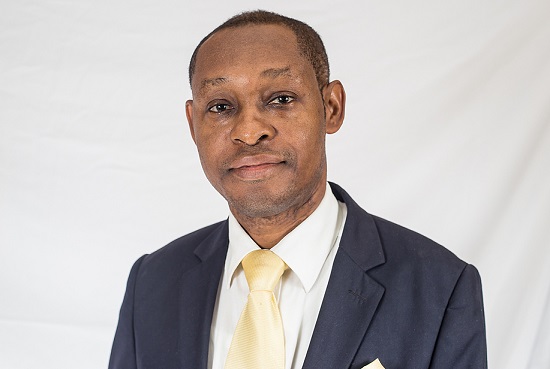
Eze Onyekpere
Nigeria at the federal, state and local government tiers of governance is challenged by very low revenues that have failed to keep pace with growing governmental obligations. This phenomenon did not start today. It only escalated after the collapse of oil prices a few years ago and has refused to go away even after the reasonable recovery of oil prices. This discourse raises a few key areas that could get in additional resources to the treasury if properly managed.
Oil has been the mainstay of the economy for so many years. But we have not fully explored and expounded the frontiers of the revenue available from oil and gas. The National Assembly has just amended the Deep Offshore and Inland Basin Production Sharing Contracts Act (Cap. D3, Laws of the Federation of Nigeria, 2004). The bill is awaiting harmonisation and forwarding to the President for his assent to become law. It is expected that this will fetch additional $1.5bn revenue to government on a yearly basis. Before this amendment, year after year, the Nigerian Extractive Industries Transparency Initiative had reported on the loss of revenue occasioned by the failure to review the fiscal terms of production sharing contracts under this law. But no one seemed interested.
It is therefore expected that President Muhammadu Buhari will go ahead and assent to the bill to become law. But it should not end there. There are other reforms needed in the Petroleum Industry which can free up and raise much more resources. The National Petroleum Policy states as follows: “The existing petroleum industry legislation in Nigeria dates back to 1969. There are also several other disparate pieces of legislation on petroleum, some of which are no longer relevant or applicable to Nigeria’s circumstances. Significantly, the Petroleum Act 1969 did not legislate sufficiently for gas as a hydrocarbon and industry in its own right, nor for a mid and downstream gas industry. The government will promote new legislation to overhaul and modernise the Nigerian petroleum sector by addressing a broad range of issues including sector governance and institutional framework, fiscal regime, corporate structure of state–owned enterprises, transparency and accountability, environmental issues”. Thus, the Petroleum Industry Bills on governance, administration, community, environmental and fiscal reforms should be next and the bill(s) should be passed by the National Assembly with the same speed and dedication with which they attended to the amendment of the Deep Offshore and Inland Basin Production Sharing Contracts Act. What is needed in the National Assembly is bipartisanship and down-playing the petty regional and ethnic politics that had attended the consideration of the PIBs on previous occasions. The enactment of the PIBs and assent by the President could throw up not less than N6tn annually in extra income to the Federation Account and this will be available for sharing by the three tiers of government.
This discourse is being written at a time when Saudi Arabia’s Aramco has been shown to be the most profitable company in the world returning $111bn in profits in the outgone year. Aramco’s profit is much more than that of giants like Apple and Microsoft. So, what are we waiting for at a time we are running huge deficits and borrowing money in an unsustainable manner? Recalling that petroleum may likely go out of fashion and will be overtaken by new energy forms in the near future, we need to get as much as is possible from this natural resource before investments in petroleum become stranded assets.
Is it not possible for Nigeria to actually look for investors and negotiate a proper gas supply and processing contract with every plan and intent to fulfil its part of the bargain? The type of contract it entered into with the Process & Industrial Development for Nigeria to supply natural gas (wet gas) at no cost to the investor via a government pipeline to the site of the investor’s production facility. The investor being required to construct and operate the facility, process the wet gas and return to the government of Nigeria, lean gas to be used for power generation at no cost to the government of Nigeria – while the investor is entitled to other derivatives stripped from the wet gas. With improved electricity supply, the country is bound to improve production of goods and service to grow the economy. This, of course, will create the avenue for more government revenue through taxes in the long run. There must be some foreign and or local investors ready and willing to put down their resources if the government shows greater sincerity of purpose.
The Medium Term Expenditure Framework 2020-2022 and the 2020 budget estimates project the sum of N200bn as revenue from stamp duties. They are however silent on accruals from previous years which have not been accounted for. Nigerians suffered deductions from their bank accounts and the money seems to have been lost in a black hole as no one accounted for the previous years. For the authorities to simply state that this is all that will be due creates a series of questions. What is the number of transactions that attract this N50 charge on a daily basis? Which government agency is following up to ensure that the treasury is not shortchanged by rampaging banks and their officials? A batch of transactions could be grouped together and short-reported instead of reporting individual transactions for which bank customers suffer deductions. Whether it is the Central Bank of Nigeria or the Federal Inland Revenue Service, etc. that is charged with collecting the remittance from the banks, it must introduce technology that sweeps every stamp duty payment automatically as it leaves the customer’s account. At a time of poor revenues, the country can ill-afford this humungous leakage of funds. The National Assembly must insist on full accounting of all previously accrued stamp duties. It is projected that from past unaccounted for stamp duties, the nation can raise not less than N5tn while a proper projection for 2020 can fetch not less than N1.2tn. The Senate in approving the MTEF had earlier recommended that proper investigations be carried out on the electronic collection of stamp duties domiciled with the Central Bank of Nigeria to ensure accountability and increase in the revenue base.
Who is actually following up on the Value Added Tax deductions and remittances? With the wide array of goods and services subject to VAT, especially with the recent increase, if up to 80% of due VAT is collected, there is no reason why its revenue should not exceed the trillion mark. All that is needed is a system and process that automatically sweep every due VAT into the appropriate government account. It is not about formal talks about introducing technology by the FIRS; instead, it can challenge young Nigerians in the technology sector to come forward with appropriate devices that will put an end to these leakages. It will not cost billions but a few millions.
It just takes a little looking in-between the lines for the federal and state governments to raise more revenues- if and only if they are ready to work as well as block leakages.
The Ministry of Labour and Employment takes this business of unclear expenditure to ridiculous heights when it provided for “capacity building on local studies in line with the administration of criminal justice system”. Pray, what is the meaning of this jargon and what has the ministry got to do with the administration of criminal justice? It goes on to ask for money to “equipping of all shortfall in equipment and resettlement in 36 states and the FCT for immediate job creation”. Then the demand for skills acquisition, upgrading and development, adoption and implementation of international labourconventions, recommendation and protocols. The purport of these estimates is only known to the key officials of the ministry. This is wrong and stands condemned.
The National Productivity Centre is asking for N7bn for Special Sustainable Development Goals without any details. This is aside from the SDG votes in the Service Wide Votes that have no details. This is the trajectory of votes for the Millennium Development Goals and now the SDGs, from the Obasanjo presidency till now, nothing substantial in terms of impact and achievements but the money gets spent. Nigeria cannot continue with this budget opacity and expect to make progress. So, the centre expects Nigerians to clap for it for proposing to spend our money for purposes that no one knows what they are all about. The implication is that the proposers of this madness are taking Nigerians for a ride. They hold everyone in contempt because if they believed we are humans, they would have been more reasonable with their approach to budgeting.
The Ministry of Agriculture has for a long time believed that opaque and unclear budgeting is a virtue. Every year, they vote billions of dollars for value chains of separate crops and animals, from maize, cassava, rice, etc. what is a value? What exactly are the votes for? Which projects, activities and their locations? The National Centre for Agricultural Mechanisation in Ilorin proposes N500m for construction of feeder roads in Lagos State. Pray, what is the mandate of this agency for it to be involved in road construction, not even within its immediate catchment area but in Lagos, the commercial nerve centre of Nigeria?
Virtually all the MDAs asking for vehicles are asking for specific foreign brands of vehicles contrary to the provisions of the Public Procurement Act which only demands functional specifications in the budget. Again, this is happening despite the local content policy of the Federal Government.
