



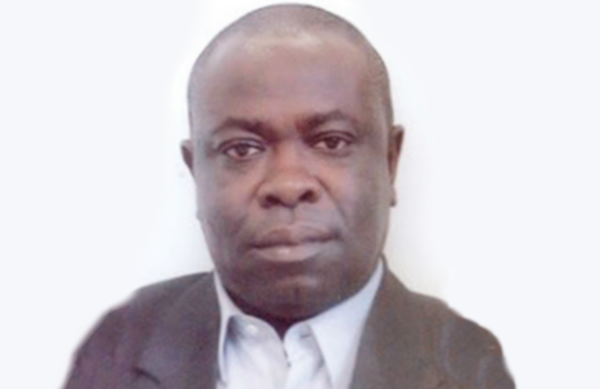
Tayo Oke
The word, “palliative”, a nice medical terminology for the care of patients and their families with life-threatening illnesses has been in vogue of late. It has become rather overused in the last couple of months in reference to welfare provision for citizens in severe hardship. “Palliative” is the wrong word for welfare and social security benefits, because the recipients are not sick, neither should they or their families be deemed to be sick, or in some medical recovery. Government spokespersons and the media employ the term as a catch-all. It should not be. Now, if in a quick ballot of residents in this country, you ask how many people are in dire need of welfare intervention in this particular moment, as you read, how many do you imagine would raise their hands? It is safe to assume that more than half the estimated 200 million inhabitants of this land would do so. But, again, since there is not enough to go round, government must prioritise and focus only on the really vulnerable, poor people. That would equally sound a reasonable thing to expect from a public policy perspective, except that the government we have in this country does not know exactly how many “deserving poor” it has to cater for.
For a start, the Federal Government does not even know exactly how many citizens there are in this country. More than 60 years after Nigeria gained its independence from the United Kingdom, we still do not have an accurate record of how many people qualify to be counted as Nigerians. And, in the land of the largest concentration of professors and experts in demography, mathematics, economics, political science, sociology, anthropology in Africa, the population figures continue to be guess work.
Nigeria arguably has the largest government bureaucracy for national data of any country in the developing world, the National Bureau of Statistics, yet we continue to qualify (quite unashamedly) our population data with the subjunctives: “about” “roughly”, “approximately”, “estimate” etc. Then, suddenly, we are in the middle of a pandemic in which real data is now of the essence. On Monday, May 4, 2020, the NBS issued a release putting Nigeria’s poverty rate at 40%. This is also guess work, I am afraid. Many people believe the figure is much worse, and the NBS figures exclude Borno State anyway. When the government imposed a series of lockdowns which suddenly pulverised and pauperised millions of hardworking citizens, no one in government knows where to start, how to count, or identify those in need. The airwaves have been saturated with cheery news of Governor X and Governor Y dolling out “palliatives” i.e. X bags of rice and money to X number of ‘needy’ citizens, yet it is difficult to pinpoint exactly on whose dinner table these bags of goodies have ended up. It is almost certain that many of you, my readers, have not come across a single soul testifying to having received a single grain of rice from anyone since the lockdown started. You will have lost count of how many desperate text messages and pings you have received from previously self-sufficient and upright citizens and family members literally begging for a quick transfer of any pittance to forestall an imminent starvation. I too have done my share of giving, so have colleagues and friends around me. Yet, we hear the drumbeat of government giving, giving and giving pummelled into us ad infinitum. Who exactly are the lucky recipients? Where do they live? It cannot all be fake news, surely. So, let us give the government a little benefit of the doubt, and dig a bit deeper into why such disbursements are proving so inconspicuous and rather elusive.
The Minister of Labour and Employment, Chris Ngige, said on a TV programme a couple of weeks ago when asked about what the Federal Government was doing to assist people who have lost their jobs as a direct result of the lockdown. His answer was quite revealing: “For public service employees, their salaries are protected”, he said self-assuredly. “But, people working in the wider population, about 80%, are in the informal sector, they make the greatest number of the GDP”. Well, Ngige is admittedly not an economist, but he is the Minister of Labour and Employment. He ought to know that the informal sector and contribution to GDP are a contradiction in terms. The informal sector is not adduced much value in a standard measurement of a country’s GDP because they are too complex and imprecise to measure. They generally do not feature on the radar of the Corporate Affairs Commission, not registered for tax purposes, VAT, pension or anything of the sort. Many in the sector (including some affluent ones) go through whole generations not even knowing the meaning of income tax. Of the 70 million workforce, only 10 million pay tax in Nigeria, according to a Ministry of Finance statement in 2017.
Ngige is not alone in this mix up though. Several state governors who appeared on another TV programme on Saturday, May 2, 2020, to share their thoughts on a similar subject were also spurting out the same crass line: “The informal sector in my state is about 60% blah, blah blah”. If the people in that sector are known, and are paying taxes, and are being catered for with state benefits, then, they cease to be informal; they are in the “subsistence” sector, part of the regular statistics. Or, is government welfare intervention inclusive of people working ‘under the radar’ (a.k.a. informal sector) as well? Most probably, yes (albeit) by accident than design. Would those people own up to receiving government help? Of course, not. One governor on the TV programme boldly announced his government’s ingenious measure of entitlement to welfare intervention whereby they extract the telephone numbers of people with a low monthly top-up of N200 on average, as a sure-bet indication of poverty. “We just call them up and give them help”, he said. Your Excellency, this writer has a standby (third) handset used only for receiving messages, and is rarely topped up not even for up to N200 a month. On that evidence alone, should he be entitled to welfare? I would rather think not. Would he hand it back if given? Most definitely not. You see what I am getting at, Sir?
To be fair, in large parts, our leaders’ haphazard approach to public policy in the area of welfare provision is not motivated by ill-will or malfeasance; it is necessitated by the rotten institutions of governance bequeathed to them. Inertia and a lack of mental energy are another pervasive problem contributing to poor decision making on their part.
For now, to round off, an economist friend of mine said to me the other day, in a casual conversation, that the silver lining to all of this is that when it is all over, coronavirus will have disrupted and dismantled inequality in this country for a generation. My response was yes, indeed, but only the material benefit of inequality would have been disrupted and dismantled. The structure of inequality in our economy will re-emerge unscathed. Dismantling inequality would require more than the odd pandemic occurring, even a more serious one than the coronavirus; the people themselves would have to demand an end to inequity. Remember, vestiges of discrimination were dismantled in Apartheid South Africa, as a prelude to majority rule in 1994, but the structure of economic inequality in the country has remained unchanged to this day. The war on that may be over, but the battle goes on. The only difference is, South Africa does not “approximate” or “estimate”, or “presume” its population, or poverty level. They collate accurate data on both, unlike the self-styled “giant of Africa”.
drtayooke@gmail.com
