



Repeated strikes by university’s academic and non-academic unions are usually coated with good intention but with many collateral damage. Nigerians, especially students have become weary as they bear the brunt on many fronts, Head, Education Desk, IYABO LAWAL reports.
It was with an ominous sense of sobriety that the Director of Press and Public Relations, Federal Ministry of Education, Ben Gong, disclosed that Nigerian university students had lost one academic year and it’s not recoverable. His statement puts a backdrop on the insidious strength of the Academic Staff Union of Universities’ (ASUU) almost one-year-long strike, which ended in December. While the COVID-19 pandemic reigned supreme in 2020 and forced schools to shut down, ASUU strike drove deeper like a poisoned dagger into the heart of university education in Nigeria.
To add fuel to the fire, the Non-Academic Staff Union of Universities and Associated Institutions (NASU) and Senior Staff Union of Nigerian Universities (SSANU) began industrial action on February 5. Even though the Federal Government threatened the unions with no work, no pay rule, they remained resolute in their demands.
Specifically, the issues in contention are non-constitution of visitation panels for universities; non-payment of arrears of minimum wage; inconsistencies in Integrated Personnel and Payroll Information System (IPPIS); non-payment of earned allowances; non-payment of retirement benefits to outgone members; neglect and poor funding of state universities; delay in renegotiation of FGN/NASU and SSANU 2009 agreements; usurpation of headship of non-teaching units by teaching staff in clear violation of conditions of service and established procedures.
A public analyst, Gift Obong described the strike as a case of two elephants fighting; “The grass, in this case being students who bear the brunt of the disagreement.” Incessant strikes, according to her, dwindle the academic performance of students. She pointed out that as learning is suspended for a long period, students’ reading abilities fall. In addition to that, knowledge acquired also begins to wane for lack of application and reinforcement.
“As it is being currently witnessed, strike alters or can even wipe out an academic calendar year. Students spend more years in school than they should. This is one major cause of producing graduates who are deficient in their fields of study. In the same vein, students who are supposed to do a four-year course end up spending six years in school for a simple programme,” Obong stated.
Gong widened the scope of strike’s implication when he explained that there are children who would have graduated at 29 and eligible to do their National Youth Service Corps (NYSC), but having lost a full year, would now graduate at 30 plus and will no longer be eligible to serve.
“The second category on the impact on age is that if you want to go into the Nigeria Police, Army, Navy and Air Force, you must not be over 27 years. If the Central Bank of Nigeria (CBN) and most parastatals are to give you a job, you must not be over 27 years. Now, children who would have graduated a year earlier and possibly gone ahead to serve and would still be 27 cannot do that.”
A good number of the students will likely not be eligible for appointment upon graduation, because they would have been above 27. This is a devastating collateral damage brought about by university unions’ repeated strikes.
There are other worries that with students being idle, vices like prostitution and theft beckon on them, as an idle mind is the devil’s workshop,” Gong added.
An educationist, Dr john Ogwu noted that when students are poorly educated at the university level, they are ill-equipped to assume leadership and are exposed to crime and dangerous conditions that will inevitably destroy the system.
“Consequently, the system is producing “uneducated” graduates within the system capable of self-destruction in the form of social chaos.
He pointed out that students end up “summarising everything just for the semester, pretty much like catching a few things and not going deep as they supposed to, but in the end, they don’t come out as leaders of tomorrow.”
However, the Federal Government is looking for ways to end the menace.
Gong explained that the Minister of Education, Prof. Adamu Adamu, would soon float an “education cloud” to address ongoing disruption in academic activities in the country. In the next six months, Gong said the Federal Ministry of Education would float an education cloud that would contain learning materials of all levels of educational system.
He added, “As we speak, Nigerians are doing online degrees, and nothing makes those online degrees inferior to the one you go and sit in the classroom to get. We are working on that, and in six months, government would commission the education cloud. It is said, ‘once bitten, twice shy,’ and government has been beaten too many times by university unions.”
Already, the strike by non-academic unions in public universities is taking its toll on the institutions as they battle filth and struggle to keep services such as electricity and water supply functional. Although teaching was going on in some of the institutions, in most of the schools, the strike had thrown up various problems. For instance, the management of the Lagos State University (LASU) has postponed its 2019/2020 first semester examinations indefinitely. Members of the NASU branch of the union shut the entrance of LASU in a bid to disrupt the examination. The workers shut examination halls and other facilities in the school.

Adamu Adamu
In other schools, refuse has piled up while they are also battling stoppage of water and electricity supplies. Admissions in some of the institutions have also been stalled while matriculation ceremonies have had to be postponed.
A senior worker, who spoke on condition of anonymity, said: “A situation where one of the union is feeling superior to the other is one of the issues in contention. No union can function without the other. For example, our matriculation has been shifted because it is not the lecturers who give gowns to students, record students’ details and give them matriculation number.
“Because those things are not in place, the university management decided to shift the matriculation because the non-academic unions are not here to do them and you cannot go and bring somebody from outside to do the job they are supposed to do. The union leaders went to the health centre and those who were there were all chased out. So, it’s terrible. Even in the administrative block, there is no light”
Also, a lecturer in one of the universities said the strike was affecting academic staff, adding that there was no electricity in his office.
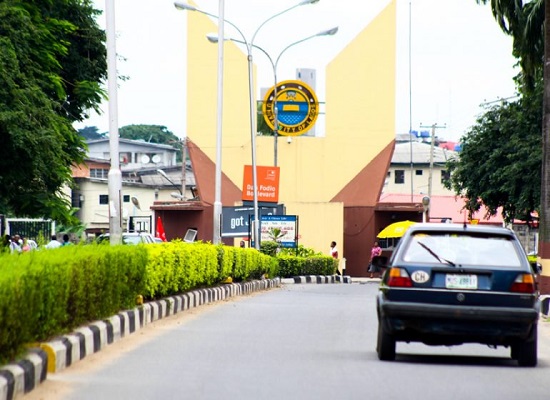
At the University of Ibadan, the main gate was devoid of the usual hustle and bustle. Few people trickled into the university through the small gate meant for pedestrians while the big gate for vehicles was locked.
A joint action committee of SSANU and NASU had listed some of their grievances as, alleged discriminatory disbursement of N40 billion earned allowances, inconsistencies in the implementation of the Integrated Payroll and Personnel Information System (IPPIS), non payment of arrears of national minimum wage, delay in renegotiation of FG/NASU and SSANU 2009 agreement and non payment of retirement benefits of outgone members.

Ibrahim
National President of SSANU, Mohammed Ibrahim said they have met with government delegation and would take the offer to their members for deliberation.
Ibrahim did not comment on the claim that government offered to add some money to the share of the two unions from Earned Allowance that has created animosity between the group and ASUU. Out of the N40 billion the Federal Government earmarked for payment of allowance to university workers, ASUU is allegedly taking about 75 per cent of the sum, leaving the rest to non-teaching staff unions.
But Minister of Labour and Employment, Dr Chris Ngige, said government has responded to issues concerning IPPIS and already assisting the non-academic workers, who have had some complaints in that direction.
He said: “We are satisfied that reasonable progress has been made. It’s a work in progress. We have put up a joint committee of the union, representatives of Federal Government from the Ministry of Education, Salary, Wages and Income Commission, Office of Accountant-General and the National Universities Commission, to work hand-in-hand. This is to make sure that all the anomalies that were complained of are treated and we do hope that it will be done to the satisfaction of everybody. The FG also has a committee that is supposed to work to formalise all allowances that have been granted the unions in the university system, so that we will have a kind of uniformity in the system as per allowances.
The committee will bring its report to us as well as the unions to make their input.”
Ngige disclosed that the issue of autonomy of universities on visitation was also discussed, adding that the visitation panel was already in place. He noted that the panel was waiting for the university system to stabilise before its members would go and audit both the administrative and financial system of the institutions for 10 years.
“At the instance of the union, they asked that they take back some of the agreements to their members and then come back to us for further discussions on the issues raised. They are to communicate to us on the possible date for our next meeting so that we can get government agencies needed for the meeting to prepare,” the minister added.
Chairman, UNILAG NASU, Kehinde Ajibade, said the union would resist any form of intimidation or force to return to work until their demands are met. Ajibade told The Guardian that despite the December 31, 2020 deadline the Federal Government promised, it is yet to fulfill the promise.
Ajibade said while ASUU outrightly rejected IPPIS because of the peculiarity of the university system; NASU accepted it because it wanted to give government the benefit of doubt to see how it would play out. ”Before now, we were using another platform to receive our salary before migrating to IPPIS. When we migrated, we discovered that IPPIS is not sustainable within the university system. Since February 2020 when the Federal Government started using IPPIS for our payment, we have been having issues. We have made series of complaints, through our bursar, to the IPPIS office and up till now, nothing has been done about it.”
If government continues to renege on its promises to the academic and non-academic unions, the end may be the total crippling of the university system and the disillusionment of Nigerian youths who spend many years seeking admission and more years in school because of one policy somersault after the other.
