



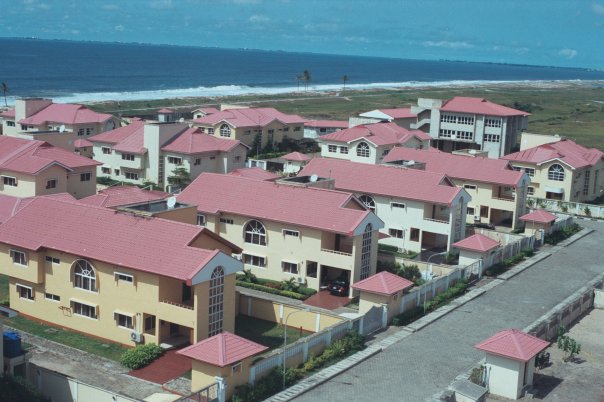
• Over N250b received by housing ministry
• Housing agencies exonerate selves from poor bookkeeping
• Anti-corruption agencies blamed for lack of monitoring
• Sector reflects nation’s opaque budgeting, governance, says CSJ
• Housing industry needs reform, audit, says CODE
• Activists seek N’Assembly public hearing on ministry
Despite budgeting billions of naira for new housing schemes, the Federal Ministry of Works and Housing has no record of homes built and sold in six years under the President Muhammadu Buhari administration.
Efforts by The Guardian to obtain the records for over three months proved abortive as the ministry’s Department of Public Buildings and Housing kept dilly-dallying and shying away from its promise to make the documents available.
The Special Adviser on Communications to the Minister of Works and Housing, Hakeem Bello, told The Guardian that the information could only be obtained from the Federal Housing Authority (FHA) and Federal Mortgage Bank of Nigeria (FMBN). When The Guardian contacted officials of FMBN, they denied been involved in the budget processes and keeping such records. FMBN Group Head, Corporate Communications, Lawal Isah, said: “The houses we handle are funded by the bank. We do not have information on houses built by the ministry. FMBN has access only to the National Housing Fund (NHF) that it manages.”
Sources in FHA also disclosed that the agency has not been under budgetary allocation.
Just last weekend, the Minister of Works and Housing, Raji Fashola, said during an inspection tour of the Federal Government Housing project situated on the Ibadan-Oyo Expressway that the Federal Government was committed and passionate about solving housing deficit in the country. The housing project is made up of 72 units.
Victor Alonge, former director of London-based firm, Wilmont Chartered Surveyors, blamed the failure of policies and government housing agencies for social housing failure in the country. He said the housing sector should be a major catalyst in the development of the economy.
“In the United States, this sector contributes over 60 per cent and in United Kingdom the same, but unfortunately, it contributes barely five per cent to the GDP in Nigeria. And it is due to the myriads of bottlenecks that make investment in the sector unattractive. Take for instance, the issue of land documentation and titling and the challenges associated with the Land Use Act.”
On the housing deficit of about 17 million in the country, Alonge said the housing delivery framework and the procurement process were designed to fail. “Direct delivery of housing by government should be a thing of the past because it has never helped. It is a major avenue for corruption. If government said they invested N10 billion into the housing sector, the real value will be about N5 billion.
“Look at the FHA for instance, after about four decades what has been its impact? l can assure you that they may not have built over 50,000 houses across the federation. In fact, I doubt if they are anywhere near the figure, how will they get it? Does it make good investment sense to invest the kind of money that has been put into FHA since inception with little or nothing to write home about? How many people will they claim to have housed across the nation? If we take a cursory look at the amount that government claimed to have invested in the agency and its achievement over time, it is nothing but a complete waste of resources.”
Currently, stakeholders have been calling for the re-examining of the policy on privatisation of FHA with a view to commercialising the authority to compete with other players in the industry in the provision of mass housing, despite receiving funding support through budgetary allocation.
With its poor record keeping attitude and lack of accountability, the ministry may have fallen back to the old times, giving credence to industry players’ notion that the Federal Government should not engage in direct construction of houses, but provide enabling environment for the private sector to handle low-cost housing projects.
According to the National Housing Policy, a major drawback in past attempts at revamping the housing and urban development sectors to deliver sustainable housing systems and efficient urban development and management in the country, was the absence of clear focus in the pursuit of the mandate of the ministry.
“The multifaceted and multidisciplinary nature of the ministry coupled with the roles in regulation of standards, prescription codes and such other measures put the ministry on collision path with other Federal Government agencies. Also the non-involvement of stakeholders and near exclusion of the private sector investors in housing and service delivery robbed the sector of necessary competition and efficiency needed for stability.
“The inability of governments alone to fund the provision of housing and urban development therefore leaves a big vacuum and massive need, which cannot be met in the sector,” the policy stated.
Specifically, The Guardian investigation revealed that the ministry has received over N250 billion between 2015 and 2020 from the budget. The six-year breakdown shows that in 2016, of the Federal Ministry of Works, Power and Housing total budget of N433 billion, N268 billion, representing 62 per cent, was allotted to works, N99 billion, an equivalent of 23 per cent, to power, and N66 billion, representing 15 per cent, to housing.
In 2016, the ministry planned the construction of 1,973 blocks of 7,068 housing units in the six geo-political zones and the Federal Capital Territory (FCT) at a cost of N44.5 billion. The government also earmarked N2,515,013,517 for the payment of local contractors debt and failed land transactions.
Similarly, the authorities proposed completion of infrastructure such as roads and drains for social housing scheme at Oron, Akwa Ibom State; Keffi in Nassarawa State; and Nkwubor in Enugu State at a cost of N540 million. There was also provision for the completion of prototype housing scheme in Suleja in Niger State with appropriation of N800 million.
About N1.630 billion was earmarked by the ministry for the construction and furnishing of ministerial quarters, comprising four-bedroom semi-detached duplexes with boys quarter and other ancillary building and services.
In 2017, N41 billion was budgeted for federal government National Housing Programme nationwide while a new Social Housing Programme of N100 billion was provided for towards a N1 trillion fund to deepen mortgage system and expand its availability across all states.
Similarly, in 2018, N26.7 billion was allocated for the Federal Government National Housing Programme and another N30.04 billion in 2019 budget under the same programme. The Federal Government also proposed the sum of N60.87 billion for capital projects in the housing sector in 2020. This was an increase from the N35.4 billion that was earmarked for the same purpose in 2019 budget.
The high priority projects in 2020 include the completion of 1,155 blocks of 2,383 units of housing under the National Housing Programme in the 36 states and the FCT, as well as the completion of ongoing Federal Secretariats in six states (Anambra, Bayelsa, Ekiti, Nasarawa, Osun and Zamfara).
According to some civic society groups and stakeholders in the sector, the government’s lack of accountability has provided avenue for corruption and improper data in the real estate sector as deficit in the housing industry continues to hover between 17 and 22 million houses.
They also called for the establishment of National Housing and Urban Development Regulatory Commission that will be saddled with rendering periodic reports on its activities to the ministry and other appropriate authorities, as well as collect and disseminate data and research findings to stakeholders.
To effectively enhance the implementation of the National Housing Policy, there is need for an institution to effectively coordinate the various efforts of other institutions and regulate the process of providing adequate and affordable housing.
The lead consultant of Centre for Social Justice (CSJ), Eze Onyekpere, said the state of accountability in the housing sector reflects the opaque budgeting and governance system the Muhammadu Buhari administration has unleashed on the Nigerian society.
“It is a claim of a right to govern without a concomitant duty to render accounts and stewardship to the people who are the ultimate sovereigns. S.14 (2) (a) of the Constitution of the Federal Republic of Nigeria 1999 (as amended) is unequivocal when it stated that sovereignty belongs to the people of Nigeria from whom government through the constitution derives all its powers and authority. This sovereignty is the power to decide who occupies public offices and to demand accountability for performance from elected and appointed public officials.
“Ideally, a yearly budget under the Fiscal Responsibility Act (FRA) should be accompanied by an account of the achievements recorded from previous appropriation. It should not be a hidden account to the legislature but an account available to Nigerians.
“Specifically, by S.19 of the FRA, it should contain a detailed analysis of the performance of the budget for the 18 months up to June of the preceding financial year and evaluation of results of programmes financed with budgetary resources. In the housing sector, this will include an account of new houses built, whom they were allocated to or how they were disposed; sale or disposal of existing houses and the accruing revenue.”
Onyekpere further said: “It is time to recreate a new and separate Federal Ministry of Housing to be led, not just by anyone, but by knowledgeable visionaries who understand the sector and how it can be used as an engine of economic growth, job creation, value addition and reduction of inequality. Such a leader will design a performance and accountability matrix that will be used for accountability, evaluation of performance and reporting to Nigerians,” Onyekere said.
The Chief Executive Officer, Connected Development (CODE), Hamzat Lawal, also told The Guardian that the housing sector needs reform and audit. “It is quite sad and unfortunate that every year money is appropriated by the Ministry of Housing, but till date, we have not seen the houses that have been built, let alone those that have been sold in the past six years.
“This is impunity, this also shows you that the 9th National Assembly are dogs that can bark, but cannot bite. Why are we not having a public hearing on how the Ministry of Housing has used its budget allocation with specific breakdown, especially on people who have benefitted from it.
