



In less than three months from now, a new administration would take charge of Nigeria’s economy. Agric stakeholders, in this article have unveiled a set of targets for the incoming president to latch on in order to bring about significant growth in Nigeria’s food sector. Gilbert Ekugbe writes.
“To whom much is given, much is expected.” But so much resources invested in Nigeria’s agricultural sector over the years, have been yielding poor results. Moreover, the sector’s growth under the present administration remains the weakest since 1999.
According to data released by StatiSense, the sector grew at an average of 15 per cent in the past five years of the Buhari-led government. The growth rate compared to previous administrations in the past showed that not much progress has been made since President Buhari took charge eight years ago.
Under former President Olusegun Obasanjo’s eight year reign from 1999 to 2007, the sector grew by 133 per cent; it also recorded 19.1 per cent under President Musa Yar Adua’s short cameo and 22.2 per cent under President Goodluck Jonathan.
Farmers and key stakeholders across the food value chain have expressed optimism that the incoming administration would usher fresh hope and direction for the agricultural sector.
It grew on a quarter-on-quarter basis at -28.90 per cent. The sector grew by 13.83 per cent year-on-year in real terms for the second quarter of 2022, a decrease of 1.96 percentage points from the preceding quarter which recorded a growth rate of 3.16 per cent and also a decrease of 0.10 percentage points from the corresponding period of 2021.
Agric policy implementation
Agric stakeholders had in recent times said that the sector is not void of laudable policies critical to take the sector out of doldrums, but these policies lacked effective monitoring and implementation mechanisms to make the policies work. There have been different agric policies formulated over the years where majority of these policies do not live long to see the light of day as a result no political will to push these policies to achieve their set goals and objectives, but for some key actors in the industry, the sector is still plagued by the inability to get the right personnel to deliver these policies to attain food security in the country.
The stakeholders have continued to task the federal government to set up an effective and efficient Joint Task Force (JTF) that would comprise of key agric stakeholders and government officials to monitor the implementation of policies in order to get the sector up and running again as it was once known for in the 60s.
More emphasis has to be placed on policy formulation with inputs from real actors in the sector such as pastoralists, farmers, processors, aggregators and the likes to chart a new course for the all-important agricultural sector.
Improved security architecture
No place is safe until everywhere is safe. The story of farmers being kidnapped and killed on their farms has raised concerns from countries across the globe leaving them to ponder if Nigeria can ever tackle its insecurity challenges, particularly in the North East and the middle belt region where majority of its food supplies are sourced. The insecurity situation has continued to discourage both local and foreign investors to invest in the sector.
Evidently, insecurity has made foreign investments in Nigeria’s agricultural sector decline to $59.17 million in the first six months of 2022, representing the lowest in five years, as insecurity remains a top concern for both local players and foreigners looking into the country.
Again, priority has to be placed on beefing up the security apparatus in these regions. Nigerian farmers and agronomists have expressed concern that widespread insecurity and higher prices of farm inputs in the country are shrinking the number of hectares put to food cultivation, warning that these might affect the productivity of farmers in the 2022/2023 wet season.
According to Food and Agriculture Organisation (FAO) more than 19 countries are currently affected by protracted crises, conflicts and violence, pointing out that conflicts can devastate agriculture and rural livelihoods, causing significant economic loss, food insecurity and damage on all scales.
“Agricultural sector recovery depends on successful demobilisation of soldiers, land de-mining and the reconstruction of rural infrastructure, in particular roads and irrigation,” FAO added. The United Nation (UN) food body added that food production is usually reduced during conflicts and in some cases collapses, leading to hunger and starvation and forcing large numbers of people to migrate, saying that food aid buffers food-intake levels to some extent but calorie availability per-capita-per-day does fall by an average of about 7.0 per cent as a result of conflict.
Preferring solutions to the hydra-headed challenges of insecurity in the agricultural sector, a research institution, Proshare said there exists a multi-dimensional relationship between human security, national insecurity, and food insecurity, as unemployment is both a contributing factor to and an effect of insecurity, adding that the low level of agricultural production, due to attacks from Boko Haram or the herdsmen, coupled with a rising population growth rate in Nigeria, is likely to lead to a food crisis and a higher unemployment level.
“The unemployed population becomes prime targets for recruitment into these insurgency groups whose actions further dampen food insecurity. Therefore, tackling unemployment is a prerequisite to curbing insecurity in the agricultural sector,” Proshare added.
Funding research institutions
Nigeria is reputed to have the highest agricultural research system in Africa though, but Nigeria is still beset with lack of adequate public investment in agriculture, lack of well-trained researchers, inadequate research infrastructures and poor management of the agricultural research. The development systems are some of the constraints to utilisation of agricultural research results. There are over 16 agricultural research institutions spread across the length and breadth of Nigeria operating at their lowest capacity as a result of lack of funding.
These institutions have critical roles to play in encouraging and implementing technologies to increase the nutrient density of commercial and staple crops through agronomic practices, conventional plant breeding, or modern biotechnology. There is an urgent need to bring Nigeria’s agricultural research institutions up to speed to provide transfer of research-induced technology to farmers which is the only way to measure research benefits to society.
The Chief Executive Officer, Centre for the Promotion of Private Enterprises (CPPE), Dr. Muda Yusuf, in a telephone interview with THISDAY lamented the neglect of research institutions all over the country, saying that they are poorly funded and cannot fulfill the purposes of their existence.
The National President, All Farmers Association of Nigeria (AFAN), Mr. Kabir Ibrahim, said particular attention should be given to the research systems by ensuring that they are funded through the Agriculture Research Council of Nigeria (ARCN) and ensuring that all their findings are readily utilised.
He explained that the bane of research in Nigeria is not necessarily its funding but the incentive given to the researchers and utilising their findings.
Funding actors of agriculture
According to the Agricultural Produce Sellers Association of Nigeria (APSAN), most of the funds dedicated for agriculture development fall into the hands of those that have nothing to do with agricultural development.
The National President of APSAN, Mr. Aloy Akortsaha, said that poor channeling of the several agricultural funds for agriculture development is the major reason why the sector is lagging behind when compared to its counterparts across the globe.
Just as scholars have continued to emphasise the need for increased participation of key stakeholders in policy formulation, it is also important that funds should get into the hands of the real actors in the sector as unscrupulous individuals take advantage of the unmonitored agric funding programmes to divert these funds into other means.
“Every day, we hear that the federal government has set up agric funds for farmers, but these farmers do not have access to these funds. The funds are always falling into the hands of wrong people who divert the funds for their personal use,” the Akortsaha lamented.
Investment in mechanised farming
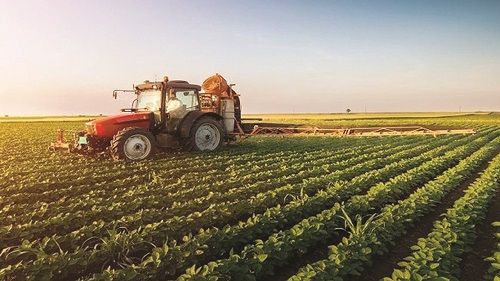
It is disheartening to see that over 80 per cent of Nigerian farmers still depending on hoes and cutlasses to meet the nation’s food demands. The urgent need to prioritise investment in mechanised farming cannot be overemphasised. Prioritising investment decisions on sustainable agricultural mechanisation is capable of contributing significantly to the development of value chains and food systems as it has the potential to render postharvest, processing and marketing activities and functions more efficient, effective and environmentally friendly.
With mechanised farming in developed economies, land reclamation has been improved, soil erosion has been reduced and irrigation systems are more efficient because of agricultural mechanisation practices.
Although, the federal government’s tractorisation programme is expected to give a new life to the way farming is being done in the country, the tractors may not get to the real farmers. Under the Federal Ministry of Agriculture and Rural Development has noted that farmers would make 40 per cent down payment while the balance of 60 per cent would be spread over a period of three years. With this move, many farmers might be deprived from getting access to these tractors. Going forward, the ministry must engage key stakeholders in the agricultural space to identify farmers under associations or cooperatives to get these tractors not only to the real farmers, but to genuine farmers that have the capacity and credibility to pay back.
