


Close Menu
FridayPosts
    Facebook X (Twitter) Instagram YouTube
    Trending
    • How to Build Daily Focus as a Leader
    • 7 Leadership Mistakes That Are Secretly Destroying Your Team’s Performance
    • Business Environmental Scanning: A Strategic Tool for Nigerian Companies
    • Competition Awareness for Sustainable Growth: Insights for Nigerian Businesses
    • The Complete Courtship Guide: Rules, Tips, and Principles for Building a Strong Relationship
    • Building a Covenant Relationship: 10 Rules That Actually Work
    • Top 100 Notable Leadership Experts in the World – From John C. Maxwell to A. Joshua Adedeji to Seth Godin
    • The Battle for 6G: How Countries Are Competing for the Next Generation of Mobile Networks
    • Home
    • AAJ Consulting
      • Abuja Leadership Coach
    • Expert Insights
      • Business
      • Faith
      • Leadership
      • Lifestyle
      • Health
      • Personality of the Week
      • Relationships
      • Small Business
      • Technology
    • Best Classified Ads
    • Buy Books
    • Pay4Books
    • Sell Online
    • Podcast
    • Shop
    • More
      • About Us
      • Advertise With Us
      • Contact Us
      • Be A Contributor
      • Send News Tips
      • Privacy
      • Terms
      • EBooks
      • My account
        • Cart
    Facebook X (Twitter) Instagram YouTube
    FridayPostsFridayPosts
    Subscribe
    Tuesday, March 10
    • Home
    • AAJ Consulting
      • Abuja Leadership Coach
    • Expert Insights
      • Business
      • Faith
      • Leadership
      • Lifestyle
      • Health
      • Personality of the Week
      • Relationships
      • Small Business
      • Technology
    • Best Classified Ads
    • Buy Books
    • Pay4Books
    • Sell Online
    • Podcast
    • Shop
    • More
      • About Us
      • Advertise With Us
      • Contact Us
      • Be A Contributor
      • Send News Tips
      • Privacy
      • Terms
      • EBooks
      • My account
        • Cart
    FridayPosts
    Home»Opinions

    Hijab not about ‘religious discrimination’

    Chief EditorBy Chief EditorMarch 25, 2021 Opinions No Comments7 Mins Read
    Share
    Facebook Twitter LinkedIn Pinterest Email

    A bill to end “hijab discrimination” has reportedly passed second reading in the House of Representatives. Sponsored by Rep. Saidu Musa Abdullahi of Niger State, the bill, “Religious Discrimination (Prohibition, Prevention) Bill, 2021,” is supposed to protect hijab wearers from various forms of discrimination. Abdullahi was, of course, reacting to the ongoing hijab war in Kwara State that had degenerated into skirmishes. Just as it happened in Osun, Oyo, and Lagos states too, schools considered “Christian” are putting their feet down against their Muslim female students wearing hijab within their premises. Abdullahi managed to dredge up a few other instances of women who have been refrained from performing certain duties on account of their wearing hijab and added that the issue needs to be addressed once and for all.

    Truly, Nigeria needs a definitive solution to this recurrent hijab issue but framing what is at stake as religious discrimination is a misdiagnosis. In countries where Muslims are a minority or migrants, religious discrimination might be a thing. In Nigeria, no honest person can allege that with a straight face.

    In Nigeria, a Muslim can petition a whole Inspector-General of Police and threaten violence if an atheist whose opinions unsettle him is not dealt with, and the letter would be honoured in less than 24 hours. Even more shocking, the target of that attack has been indefinitely incarcerated without trial. In Nigeria, a Muslim would petition the Police IG saying that a woman who posted a photograph of herself on Instagram had blasphemed, and then threatened the issue could degenerate into violence. The woman in question almost went into exile even after she withdrew the photo, donned a hijab, and virtually begged for her life. In another country, those that threatened her would have at least been arrested, but not Nigeria. When a religion that can pull those kinds of stunts alleges discrimination, you want to take a closer look.

    What is at stake is a bigger problem that the bill before the lawmakers cannot simply fix.

    People have serially argued that as long as the schools in question are funded by the state, the Christian administrators cannot disallow religious apparel. I admit I find it hard to get behind this argument because even private organisations should be discouraged from denying people the right to making choices. Advancing any legitimate grounds for denying young women the right to self-expression so that they can get an education backfires when a woman wears supposedly revealing dresses.

    The other concern with the argument about school funding is its belatedness. Most government-funded institutions in Nigeria have long been ghettoised, long ceded to communities of religion, tribe, and even clans. The government itself has indulged the provincialisation of public spaces. For instance, it does not matter that Usman Dan Fodio University is federally-funded, a Christian southerner is not about to become their vice-chancellor anytime soon. You can say the same of the University of Nigeria in Nsukka electing a Muslim northerner as VC. Our parochialism has reached the point that Ibadan elders even insisted that the University of Ibadan’s incoming VC must be Ibadan. We are no longer talking about non-Yoruba; even fellow Yoruba outside their local enclaves were disqualified. In some places, such an appointee must belong to a specific religion or a specified religious denomination. Forget who funds these institutions, we are dealing with serious malaises. What those that say they do not want hijab wearers in their school are fighting against is a gentrification of the spaces that they have arrogated to themselves on the basis of religion.

    Then, there is the “tolerance” argument. Apart from the condescension embedded in looking down from a height to “tolerate” other people’s religious expressions, intolerance is another institutionalised behaviour in Nigeria. People will claim that their religion does not allow them to consume alcohol, destroy the private property of non-Muslim entrepreneurs who sell beer, and will be allowed to get away with it. How come the argument about tolerance never comes up to restrain them from regulating other’s personal choices? In that same Ilorin facing an ongoing hijab crisis, a federally-funded university announced a dress code for their students -most of whom are legal adults- based on the private values of some of their administrators. What gives them the right to do it but stops secondary schools with Christian administrators from doing the same?

    The bigger problem here is that Nigeria does not have a defined set of values to defer in times like this. Our pluralist country runs on the opinions of individuals and groups of people within a space where they have managed to capture power, not universal values. In a 2017 article on this hijab issue, I made a similar point. That time, it was the case of Firdaus Amasa, who had insisted on wearing a hijab to her call to bar ceremony. Then Nigeria Bar Association president quickly jumped into the issue to point out his lawyer daughter was allowed to wear her hijab in New York, USA. I also pointed out to him that in that same New York, gay people get married. Will the Nigerians who beat everyone on the head with “tolerance” over hijab demonstrate the same liberal tendencies if the issue was about sexuality? Hardly. Selectively reaching for instances of diversity in western nations to make certain arguments while overlooking the whole package is dubious. That kind of ideological transvestitism is why the problem recurs.

    As things stand, the hijab war is unwinnable for everyone. Asking Christian school administrators to accommodate the hijab wearers is making them give up something for Muslims who would act the same way as the Christians are doing if they faced a similar situation. The contest is no longer about a sartorial assertion of one’s faith but a test of boundaries that will affirm the right of one to dominate the other. With the vandalisation of property and physical assaults carried out by supposedly religious parents, pushing girls in hijab into those schools will make for bad blood that might imperil their education. We need less acrimonious solutions than a legislative fiat.

    We are at an impasse, facing a problem sponsored by our leaders who have indulged and manipulated religious and tribal sentiments at the expense of social cohesiveness. The fight is about hijab, yes, but we also contend a lack of standards guiding social relations. Unfortunately, Nigeria as a national concept has no moral content or internal integrity. When some other countries face a similar crisis, they sometimes say, “this is not who we are” to motivate themselves to look beyond certain irritations and rise to a level of exemplary virtues that correspond with the myths of their national character. What defining values does Nigeria have that suffice here? That is why alluding to liberal orthodoxies most people hardly subscribe to-or running to the Internet to dig up photos of hijab wearers in supposedly Christian nations as evidence of “tolerance”-has been futile.

    To some extent, the law should have been that respectable moral authority to settle these differences and recursively shape how we understand and approach these issues in the future. However, the same problems of nepotism and corruption that affect the rest of Nigeria also plague the institutions of justice. They are hardly perceived as neutral arbiters anymore. We are a religious nation, but we cannot draw on our respective faiths since what is dividing us is God himself.

    Without confronting the underlining issues, rushing to make a law to institutionalise hijab is only treating the symptoms of malignant disease. The resentment that will follow that decision will crop up in other issues, and we will soon be back at square one, vituperating at one another. There is no solution in imposing a law that will merely allow hijab in places where they are not wanted but has no universal purchase. If the law against “religious discrimination” does not make a similar demand of open-mindedness on those who routinely petition the police IG to threaten violence and breakdown of public peace over personal differences, it is a pure waste of time.


    [Punch]

    Post Views: 59

    Comments

    comments

    Abimbola Adelakun Hijab Religion Discrimination
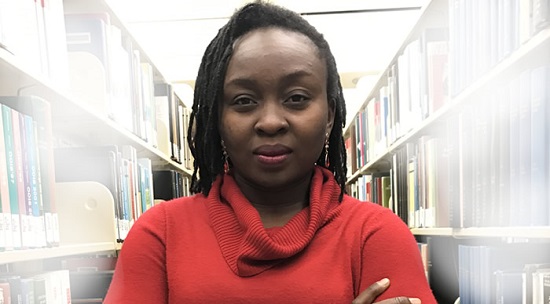
    Chief Editor
    • Website
    • Facebook
    • X (Twitter)

    As the Editor-In-Chief at Fridayposts, my commitment is to make valuable, insightful and useful articles and latest news contents available to our highly esteemed readers and subscribers.

    Keep Reading

    President Trump’s UN Speech and the Future of Multilateralism: Disruption or Renewal?

    Restructuring as the Foundation for Nigeria’s Sustainable Development

    Flood Warnings Across Nigeria: Why 15 States Are at Risk and What This Means for Policy, People, and the Future

    A Familiar Script

    Tinubu, Trump & Turmoil: The 24 Breaking Headlines That Shaped the World (April 14–19, 2025)

    Expert Opinion: The Historical Context and Implications of Tinubu’s Potential Cabinet Reshuffle

    Add A Comment
    Leave A Reply Cancel Reply

    Sponsored Ads
    Products
    • You Are A Prophecy To Be Fulfilled: How to Recognize, Receive, and Realize God’s Purpose for Your Life - Revised & Expanded Edition (Hardcover) You Are A Prophecy To Be Fulfilled: How to Recognize, Receive, and Realize God’s Purpose for Your Life - Revised & Expanded Edition (Hardcover) ₦30,000.00 Original price was: ₦30,000.00.₦28,390.00Current price is: ₦28,390.00.
    • You Are A Prophecy To Be Fulfilled: How to Recognize, Receive, and Realize God’s Purpose for Your Life - Revised & Expanded Edition (Paperback) You Are A Prophecy To Be Fulfilled: How to Recognize, Receive, and Realize God’s Purpose for Your Life - Revised & Expanded Edition (Paperback) ₦19,000.00 Original price was: ₦19,000.00.₦16,430.00Current price is: ₦16,430.00.
    • Phases in Spiritual Leadership: How God Shapes Ordinary Believers into Trusted Kingdom Leaders Through a Spiritual Process - Second, Revised & Expanded Edition (Hardcover) Phases in Spiritual Leadership: How God Shapes Ordinary Believers into Trusted Kingdom Leaders Through a Spiritual Process - Second, Revised & Expanded Edition (Hardcover) ₦28,000.00 Original price was: ₦28,000.00.₦24,817.00Current price is: ₦24,817.00.
    • Phases in Spiritual Leadership: How God Shapes Ordinary Believers into Trusted Kingdom Leaders Through a Spiritual Process - Second, Revised & Expanded Edition (Paperback) Phases in Spiritual Leadership: How God Shapes Ordinary Believers into Trusted Kingdom Leaders Through a Spiritual Process - Second, Revised & Expanded Edition (Paperback) ₦19,500.00 Original price was: ₦19,500.00.₦16,430.00Current price is: ₦16,430.00.
    • The Major Baton Transferred: Rediscovering God’s Kingdom Mandate for Dominion and Influence (Hardcover) The Major Baton Transferred: Rediscovering God’s Kingdom Mandate for Dominion and Influence (Hardcover) ₦22,000.00 Original price was: ₦22,000.00.₦18,450.00Current price is: ₦18,450.00.
    JUST IN

    How to Build Daily Focus as a Leader

    February 17, 2026

    7 Leadership Mistakes That Are Secretly Destroying Your Team’s Performance

    February 17, 2026

    Business Environmental Scanning: A Strategic Tool for Nigerian Companies

    October 1, 2025

    Competition Awareness for Sustainable Growth: Insights for Nigerian Businesses

    October 1, 2025

    Top 100 Notable Leadership Experts in the World – From John C. Maxwell to A. Joshua Adedeji to Seth Godin

    September 27, 2025
    • NIGERIA
    • POPULAR POSTS

    Be a Leader Indeed, the One that Inspires!

    July 15, 2025

    Enroll ‘Total Christian Certification’ Course: Transform Your Faith, Lead with Purpose, Live Fully in Christ | Hubpile | KPA | KPM

    April 6, 2025

    Petrol Price Hike: NLC and Atiku Warn of Dire Consequences as Nigerians Face Economic Hardship

    September 9, 2024

    Small Investment, Big Returns: A Guide to Launching a Business in Nigeria with 100k Naira or Less

    August 29, 2024

    Uzza, The Ark of Covenant And The Tale of Sisters Nicki And Tasha

    August 31, 2017

    Tips for Newly Weds: How to Make a Beautiful Home

    January 21, 2017

    Towards Your Destiny: You May Not Look It Now!

    September 6, 2016

    Death Sentence for Kidnappers in Nigeria: What Were Senators Waiting For?

    May 5, 2016
    Podcast This Week

    Subscribe to Updates

    Get the latest creative news from Fridayposts.com about politics, leadership and business.

    FOLLOW US
    • Facebook
    • Twitter
    • YouTube
    • WhatsApp
    Exchange Rate

    Exchange Rate USD: Tue, 10 Mar.

    Type above and press Enter to search. Press Esc to cancel.