



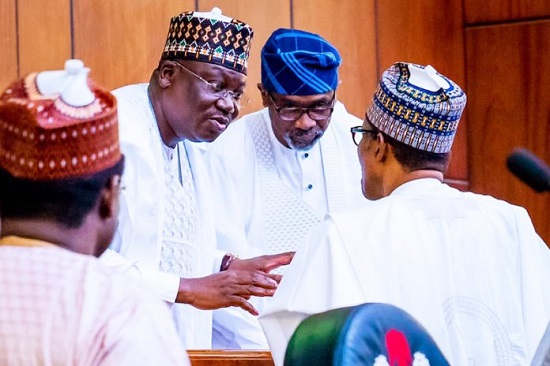
• NASS approves N3.324tr for debt servicing
• Passes N453.2b NDDC 2020 budget
• FG to sell assets to finance N5.196tr deficit
The wobbly fiscal position of the country is set to remain uncertain as two chambers of the National Assembly, yesterday raised the proposed 2021 budget by as much as N508 billion and retained the revenue benchmarks, which economists described as “spurious.”
The two chambers increased the proposed budget from N13.08 trillion to N13.588 trillion. It also retained the oil production and price benchmarks at 1.86 million barrels per day and $40 per barrel respectively.
The decisions have raised fresh concerns about the budget deficit, originally estimated at N5.2 trillion (40 per cent of the budget). Energy experts have queried the lawmakers’ decisions, saying they were not realistic and thorough in the legislative process as promised.
With the sum of N5 .196 trillion as deficit, the National Assembly on Monday approved N13.588 trillion as 2021 budget. A total of N496.528 billion was approved for statutory transfer.
The budget is based on projected aggregate revenue of N7.886 trillion, including N3.502 trillion of the Federal Government share of the federation revenue and another N1.348 trillion from government-owned enterprises.
President of the Nigerian Association for Energy Economists (NAEE), Prof. Yinka Omorogbe, said the intensity of the second wave of COVID-19 has thrown a spanner in the works as far as the budget parameters are concerned, and that the lawmakers could have been more conservative in benchmark setting.
“There is so much uncertainty. I would be more comfortable with a lower price,” Omorogbe said, arguing that travelling, which would affect production and oil demand drastically, is declining as different countries impose new phase of lockdowns. She insisted that the current oil prices were not sufficient justification for the chosen price benchmark, as the market could change dramatically in coming months.
But PwC’s Associate Director in charge of Energy, Utilities, and Resources, Habeeb Jaiyeola, said the $40 price benchmark was conservative enough, considering the current market index.
Bonny Light, which Nigeria’s crude is benchmarked, traded at $51.74 yesterday, the highest since March. It has gained about 40 per cent since early November when it started the current rally. The market recovered modestly in July and August but retreated in September at the news of the second wave of the pandemic.
While many experts said the new COVID-19 wave could push back prices down the trough, Jaiyeola and Bala Zakka, another energy economist, said humanity has conquered the most traumatic power of the outbreak, arguing that restriction cannot be 100 per cent again.
Jaiyeola, however, said the production benchmark could pose serious challenge to meeting the revenue target, as it is above the current OPEC quota.
Nigeria’s quota, which is adjusted monthly, has oscillated between 1.3 and 1.5 in the past months. Severally, Nigeria and a few other countries have been queried for exceeding the rations. The production benchmark is about 400,000 above its current quota, which experts said might not improve remarkably in the next one year.
Experts had questioned the feasibility of other revenue targets as contained in the budget proposal, saying a number of them were not achievable. The inability to meet either the crude production or price benchmark will expand the deficit, already put at 40 per cent, and make the budget largely unimplementable.
The Senate explained that the difference between the N13.082 trillion presented to the joint session of the National Assembly in October 2020 and the N13.588 trillion passed yesterday arose from the N365 billion spending request for the upscaling of the National Social Investment Programme (NSIP) and the discovery of under projection of a total revenue to the tune of N100 billion.
The two chambers of the National Assembly also approved N3.324 trillion for debt servicing in a budget that provided N4.125 trillion for capital expenditure and N5.641 trillion as recurrent expenditure
The budget as passed yesterday is presumed on 40 United States dollars per barrel as crude oil benchmark. It was also presumed on crude oil production of 1.86 million barrels per day (mbpd).
The official exchange rate on which the budget was based is N379 to US dollar.
The Senate also explained that the N5.196 trillion deficit would be financed by revenues from sale of Federal Government assets projected at N205.153 billion and debt financing items worth N4.281 trillion, as well as some multilateral and bilateral project-tied loans of N709.685 billion.
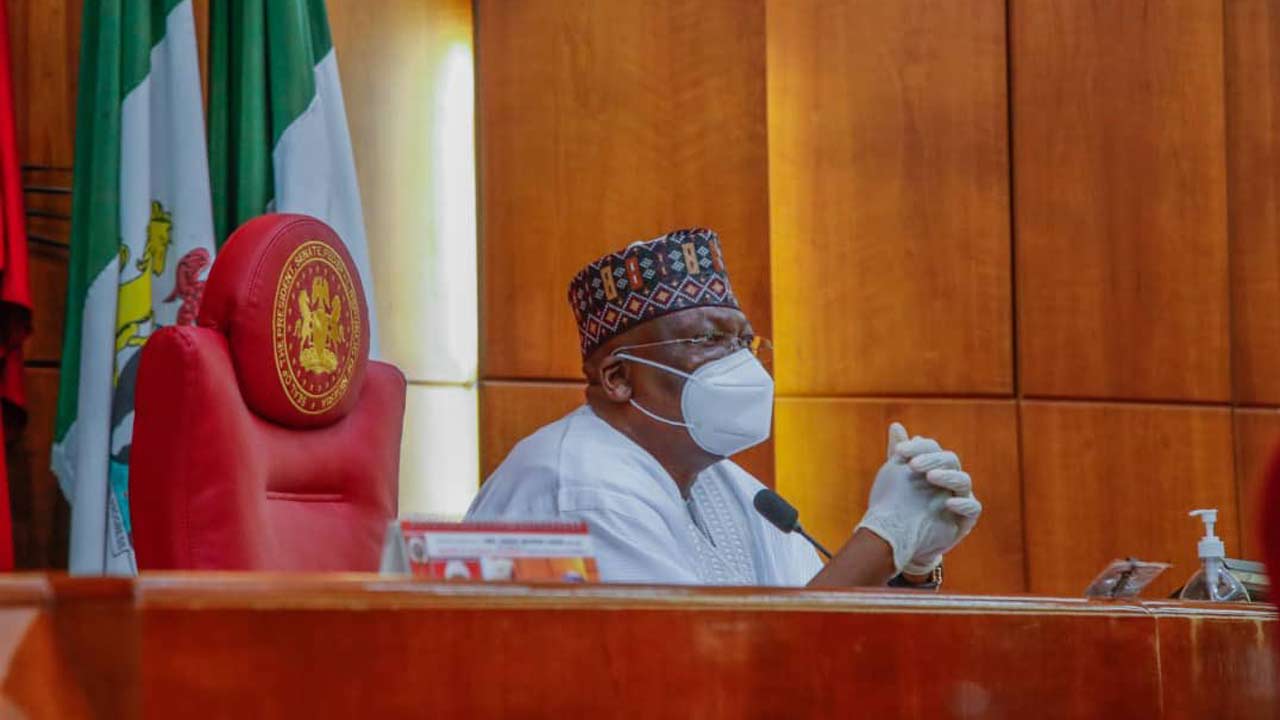
President of the Senate, Ahmad Lawan, in a remark after the passage of the budget, said the National Assembly would not accede to another request from the Executive to extend the capital implementation of the 2020 budget.
According to the Senate President, the National Assembly’s approval granting extension for implementation of the capital component of the 2020 budget last week should be fully utilised by Ministries, Departments and Agencies of Government.
He added that the extension of capital implementation of the 2020 budget till March 31, 2021, alongside the implementation of the 2021 budget starting in January 2021, would guarantee sufficient injection of funds into Nigeria’s economy.
“For Nigerians, this budget that has been passed in the National Assembly today is to ensure the economy is supported fully through public expenditure because the economy of our country depends largely on public expenditure.
“The budget extension period for implementation of the 2020 budget, which we did last year, is to ensure that the funds that are available for 2020 are not lost.
“So, there will be two budgets running; funds from 1st January, 2021, up to 31st March, 2021; and then the implementation of the 2021 budget itself to start from January. That is absolute fight against the recession we are suffering from.
“With a projected three per cent growth in our Gross Domestic Product (GDP) in the 2021 budget, we believe the recession which Nigeria is in will be over before the end of the first quarter.”
SIMILARLY, the House of Representatives yesterday passed the 2021 Appropriation Bill of N13,588,027,886,175.00 (Thirteen trillion, five hundred and eighty–eight billion, twenty–seven million, eight hundred and eighty–six thousand, one hundred and seventy–five naira).
The decision followed the adoption of the Mr. Aliyu Muktar Betara-led Committee on Appropriations at the plenary presided by Speaker Femi Gbajabiamila.
The budget themed “Budget of Economic Recovery and Resilience”, designed against the backdrop of a global economic crisis and domestic impact of COVID -19 was jerked upward by over N580 billion as presented by President Muhammadu Buhari, worth N13.08 trillion.
Of the amount, the sum of N496,528,471,273 (Four hundred and ninety–six billion, five hundred and twenty–eight million, four hundred and seventy–one thousand, two hundred and seventy–three naira) only is for Statutory Transfers, N3,324,380,000,000 (Three trillion, three hundred and twenty–four billion, three hundred and eighty million naira) only is for debt service.
The budget includes the sum of N5,641,970,060,680 (Five trillion, six hundred and forty–one billion, nine hundred and seventy million, sixty thousand, six hundred and eighty naira) only is for recurrent (Non-Debt) expenditure while the sum of N4,125,149,354,222 (Four trillion, one hundred and twenty–five billion, one hundred and forty–nine million, three hundred and fifty–four thousand, two hundred and twenty–two naira) only is for contribution to the development fund for capital expenditure for the year ending 31 December, 2021.
Just like the Senate President warned, the Speaker said the January to December budget circle will remain sacrosanct.
He said: “By our joint efforts and the grace of God, we will maintain this standard for every year we are in office, and leave a legacy for our successors to aspire to.”
MEANWHILE, the Senate has passed into law, the Niger Delta Development Commission, NDDC’s N453,200,000,000 budget of 2020.
The Senate had made a slight amendment to the appropriation act to permit the implementation of the capital aspect of the 2020 Appropriation Act till the end of March 2021.
This, it said, was to ensure fuller implementation of the 2020 budget, which is very critical to stimulation of the economy.
The crises within the commission delayed the budget passage.
The passage of the budget was sequel to the consideration of the report by the Chairman, Senate Committee on Niger Delta Affairs, Senator Peter Nwaoboshi (Peoples Democratic Party, Delta North), that the Senate did receive and consider the report of the committee on the 2020 Budget estimates at the Committee of Supply.
Laying the report before the plenary, Nwaoboshi said the committee carried out a holistic oversight of the Commission and noted that the developmental aspect of the budget was basically a rollover of the 2019 Budget, which is in furtherance of the drive to ensure completion of ongoing projects.
