



Laolu Afolabi writes on the huge challenges facing the Bola Tinubu administration as it addresses poor infrastructure in the country
Nigeria, spanning 356,668 square miles (923,769 square kilometres) with a 530-mile coastline (853km), is Africa’s most populous nation with over 230 million people. It borders the Republic of Benin to the west, Chad and Cameroon to the east, and Niger to the north. Despite its vast potential, Nigeria’s infrastructure is severely lacking. The 2019 Global Competitiveness Index Report ranked Nigeria 130th out of 141 economies for infrastructure quality, scoring just 48.33 out of 100. This indicates a significant infrastructure deficit.
This infrastructure shortfall, amounting to 30 per cent of Nigeria’s GDP, is far below the 70 per cent international benchmark set by the World Bank. With a population growth rate exceeding 2.5 per cent annually and projections of 400 million people by 2050, Nigeria’s current infrastructure is at risk of being overwhelmed. The World Bank estimates that Nigeria needs to invest $3tn to bridge this deficit.
Nigeria ranks 24th out of 54 African countries in the Africa Infrastructure Development Index trailing behind Egypt and Libya. Although Nigeria has relatively advanced power, road, rail, and ICT networks compared to some of its peers, the quality and efficiency of these systems are inadequate. Unreliable power supply, poor road conditions, and inadequate water and sanitation facilities hinder growth and development.
Nigeria’s road networks are in poor condition due to lack of maintenance. Addressing Nigeria’s infrastructure challenges will require sustained expenditure of almost $14.2bn per year over the next decade, or about 12 per cent of GDP. Nigeria already spends about $5.9bn. It is well placed to raise the funds needed for infrastructure, given the strength of the national economy and oil revenues.
On assumption of office on May 29, 2023, President Bola Tinubu was faced with inadequate infrastructure and transportation. Although successive administrations before it had contributed to advancing the infrastructure development of the country, the incumbent has prioritised infrastructure and transportation as key areas for development under his “Renewed Hope” agenda.
President Tinubu, in his drive to address this long-standing issue, laid out a comprehensive plan to upgrade Nigeria’s infrastructure. This includes investments in roads, railways, airports, and energy sectors. His approach is driven by the belief that robust infrastructure is essential for economic diversification and sustainable growth. Aside from the inherited projects bequeathed to him by the administration of ex-President Muhammadu Buhari, President Tinubu is also opening up new frontiers for Nigeria’s development. In the one year, he has approved about N6tn for infrastructure upgrades.
After a marathon Federal Executive Council meeting on May 13 and May 14, 2024, which was described as unprecedented in the history of the council, the administration rolled out the planned massive construction works across the country. The government is set for the reconstruction of the Iseyin-Okeho-Iganna Road in Oyo State; the reconstruction of the Koton-Karfe-Abaji Road (Abuja bound), along Abuja-Lokoja Route in Kogi State; the equalisation of Lokoja-Benin Road, Okpela Section, Lokoja-Benin dualised Auchi Section-Uromi Link Road and the Lokoja-Benin Road, Ekpoma Section, where a fuel tanker fell into high water recently. The reconstruction will be financed by BUA Cement at a cost of N120bn under the tax credit scheme.
Also, contractors have been mobilised to build roads and bridges in Kaima-Tesse, Kwara State; Benin-Agbor, Benin Bypass and Ngaski-Wara in Kebbi State.
The FEC also approved the procurement of the Sokoto-Illela-Badagry superhighway, which is meant to join the Lagos-Calabar Coastal superhighway flagged off by President Tinubu on Sunday, May 26, 2024.
Also on Sunday, the president flagged off the design and procurement for the 461km Enugu-Abakaliki-Ogoja Road, which will traverse Benue, Kogi, and Nasarawa states, terminating at Apo in the Federal Capital Territory (FCT). He also performed the virtual flag-off of the reconstruction and rehabilitation of 330 roads and bridges across the six geopolitical zones of the country.
Speaking at the flag-off of the construction of the 700km Lagos-Calabar coastal highway, which takes a larger share of the 853km coastline of the country, President Tinubu highlighted the projects’ benefits, including boosting 30 million businesses, and assured Nigerians that the projects would never be abandoned. At the ceremony, the president also ordered that sections three and four of the project should commence from Akwa Ibom and Calabar. There is also provision for the design and procurement of the 1,000km Sokoto-Badagry highway, which is expected to connect Sokoto to Badagry in Lagos State, passing through Kebbi, Niger, Kwara, and Oyo states.
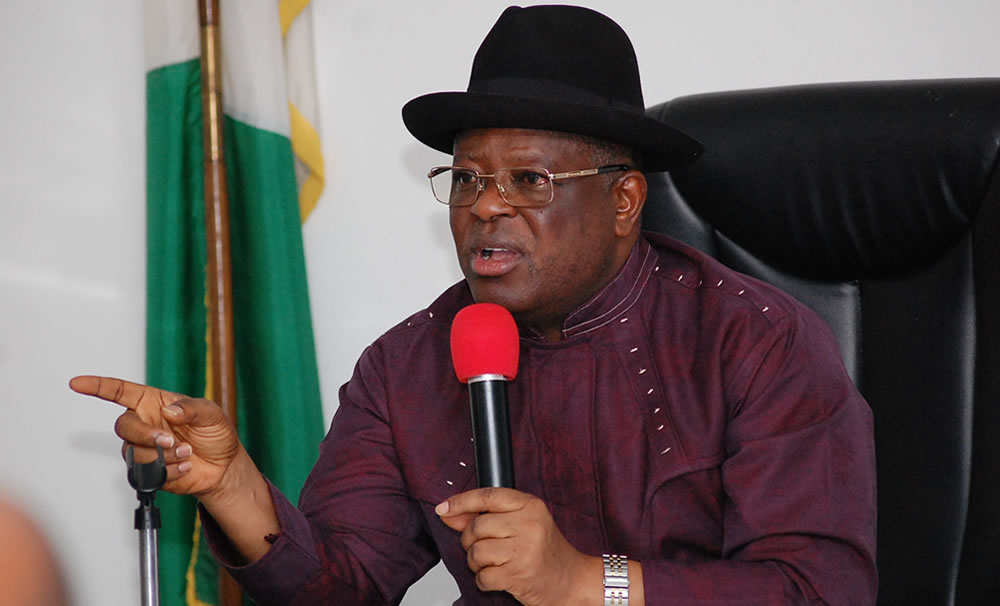
The project, it will be recalled, has been controversial. There have been exchanges of words among Nigerian politicians, including former Vice-President Atiku Abubakar, who is the presidential candidate of the Peoples Democratic Party in the 2023 election and the candidate of the Labour Party, Peter Obi, with the Minister of Works, David Umahi, on the economic value of the road and the environmental impact assessment. There had also been cries over demolition, including a section of Landmark, a tourism service provider at the beach.
President Tinubu, in an open reply to critics, however, said, “Everybody wants a good highway, but nobody wants it to go through his backyard. It is my bragging day, we said we would do this road. We are determined to do it, it will outlive us.”
Recognising the limitations of public funding to boost infrastructure, Tinubu has promoted the use of Public-Private Partnerships to bridge the infrastructure financing gap. This strategy aims to leverage private sector expertise and capital, ensuring efficient project delivery and management. Several high-profile infrastructure projects are being executed through this model. For instance, the Apapa-Oworonsoki concrete road was constructed and financed by Dangote Group and the Ekpoma section of the Lokoja-Benin Road was financed by BUA Cement at a cost of N120bn under the tax credit scheme.
Another vital infrastructure is urban development. The administration is focused on urban infrastructure, particularly in major cities like Lagos and Abuja. Initiatives include the development of smart cities, improved sanitation systems, and the enhancement of public utilities to improve living standards and attract investments.
In Abuja, the Federal Government, through the Federal Capital Territory Administration, is revamping the Metro Line, which was earlier inaugurated by ex-President Muhammadu Buhari but vandalised during the COVID-19 lockdown. It was the first rapid transit system in the country, West Africa, and the second such system in sub-Saharan Africa after Addis Ababa Light Rail. The first phase of the project connects the city centre to the Nnamdi Azikiwe International Airport, stopping at the Abuja-Kaduna Railway station in Idu. By Wednesday, May 29, President Tinubu will kick off the commercial operation of the Metro Line, in a move aimed at improving infrastructure in the FCT. The FCT Minister, Nyesom Wike, also carried out major interventions and constructions to mark the first anniversary of the administration.
To address the urban-rural divide, the administration said it invested in rural infrastructure projects, including road construction, electrification and water supply systems, in a bid to spur rural economic activities and reduce migration to urban centres.
Nigeria must also continue to experience a significant transformation in its rail transport sector and this must be driven by the government’s commitment to improving infrastructure. The transformation, which started during the administration of ex-President Buhari, must be sustained at a greater tempo if the current administration would reduce the infrastructure gap.
The Lagos-Ibadan standard gauge, which connects Lagos, from Apapa port to Ibadan, the Oyo State capital, is part of the Nigerian Railway Modernisation Project, consisting in the realisation of a new standard gauge railway line from Lagos to Kano, with connections to Abuja, via Minna and Kaduna. The total length is 1,315 km. The Tinubu administration is expected to continue with the project on the Kaduna-Kano and Ibadan-Abuja lines. The coastal railway route does not appear on previous Nigerian railway plans but is also a major infrastructure boost for the country if implemented. Approximately 1,402km, it will pass through major cities, including Port Harcourt and Uyo.
The Itakpe-Warri rail line, approximately 327km, was conceived to serve the Ajaokuta Steel Mill. The ongoing Kano-Maradi line will connect the country to Maradi in Niger Republic, enhancing cross-border trade and connectivity. The Port Harcourt-Maiduguri rail line, a narrow gauge line covering several states, is also being rehabilitated. The section of Port-Harcourt to Aba had been completed and inaugurated by President Tinubu, with commercial activities fully resumed,
The ongoing rail projects across the country signify a shift towards modernising the transportation infrastructure. If successfully implemented, these projects will enhance connectivity, boost economic activities, and improve the overall quality of life for Nigerians. The success of these initiatives will depend on overcoming financial, security, and operational challenges through innovative solutions and sustained political commitment.
There are still challenges with the airports and seaports across the country. The modernisation and upgrade of airport facilities and the expansion of Apapa, Tin Can Island and Onne ports are vital to the infrastructural drive of the administration. The development of Nigeria’s inland waterways to facilitate efficient transportation of goods and people within the country would go a long way to also boost the GDP. The government should also focus on dredging the Niger and Benue rivers.
With the fuel subsidy removal, petrol has become very expensive, thus taking a toll on the transportation of goods and services. The government promised to roll out the Compressed Natural Gas-powered vehicles. Some states like Lagos, Ogun and Niger have purchased gas-powered buses for mass transportation. There is also an in-road for electric vehicles. It is hoped the government will expedite action on the mass procurement of CNG-powered vehicles to reduce the cost of transport and movement of goods and services.
Tinubu’s ambitious infrastructure development plans have the potential to dramatically reshape Nigeria’s economic and social landscape. However, realising these plans requires overcoming substantial challenges, including securing adequate funding, improving bureaucratic efficiency, and ensuring security. The success of these initiatives will depend on sustained political will, innovative financing, and effective implementation. If these hurdles can be surmounted, Tinubu’s vision for Nigeria’s infrastructure may well become a reality, leading to a more prosperous and equitable future for the nation.
