



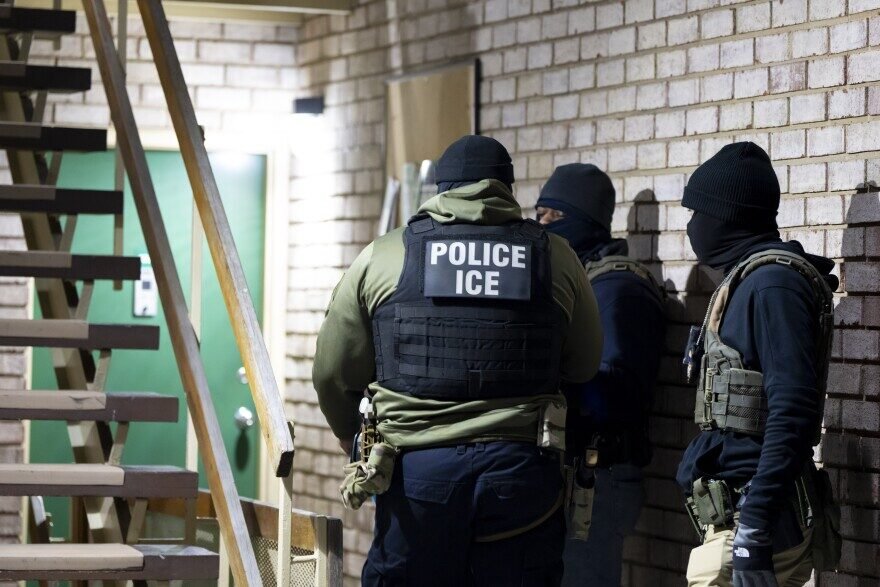
The United States was shaken this week by a tragic shooting incident at an Immigration and Customs Enforcement (ICE) facility in Dallas. Reports confirm that a gunman entered the detention center, opened fire, killed a detainee, and then took his own life. While investigations are still ongoing, the episode has reignited fierce debates around security, immigration, and the systems meant to protect both citizens and migrants.
For Americans, the attack underscores growing concerns about security in highly sensitive institutions. For the world — including nations like Nigeria whose citizens are often caught up in the complexities of U.S. immigration policy — it raises urgent questions about the balance between safety, human rights, and the politics of border control.
Understanding the Incident
The Dallas shooting is not just another case of American gun violence. Its setting — an ICE detention facility — gives it broader political and social resonance. ICE facilities are already controversial, frequently criticized for overcrowding, alleged human rights violations, and the psychological toll on detainees. An attack inside such a facility brings those controversies into sharp focus.
-
Vulnerability Exposed: Detention centers are designed to be secure, yet this incident shows gaps in screening, surveillance, and emergency response.
-
Symbolism: For critics of ICE, the shooting symbolizes a system under siege. For supporters of strict border control, it highlights the risks of poor security management.
-
Public Trust: The fact that such violence could happen inside a federal facility erodes confidence in the government’s ability to safeguard people in its custody.
This is not simply about one facility; it is about what happens when the politics of immigration collide with the realities of public safety.
America’s Gun Violence Epidemic
Any analysis of this event must grapple with the broader context: America’s ongoing struggle with gun violence. No other developed nation experiences shootings at this scale or frequency. The ICE facility shooting adds to a grim list of incidents in schools, places of worship, shopping malls, and workplaces.
The implications are chilling: if even a federal detention facility cannot be kept safe from firearms, where in America can truly be considered secure? This deepens public anxiety and renews calls for stronger gun control measures — an issue that remains politically polarizing.
Immigration and Security: A Tense Intersection
ICE facilities embody one of America’s most divisive issues: immigration. They hold individuals awaiting deportation, asylum hearings, or immigration rulings. Within their walls are stories of desperation, resilience, and hope.
The Dallas incident intersects with this debate in three critical ways:
-
Safety of Detainees
Whatever their legal status, detainees are under government custody. That places a legal and moral obligation on authorities to guarantee their safety. This shooting represents a profound breach of that responsibility. -
Public Perception of ICE
ICE is already a polarizing institution. Advocates of stricter immigration control view it as essential to national security, while critics see it as an enforcer of unjust policies. This shooting complicates both narratives, raising new questions about whether ICE can both enforce laws and protect lives. -
Global Relevance
For countries like Nigeria, whose citizens are often detained in ICE facilities, the incident has implications for diaspora relations, consular responsibilities, and diplomatic conversations with Washington.
Implications for Businesses
Though the shooting appears unrelated to economic motives, it still impacts businesses indirectly:
-
Investor Confidence: Rising violence undermines the image of America as a safe, stable environment for business.
-
Supply Chains: Immigration policy affects the availability of labor, especially in industries reliant on migrant workers. Security incidents like this amplify anxieties around immigration enforcement.
-
Corporate Responsibility: Companies with immigrant employees may feel compelled to advocate for humane, secure treatment of migrants, recognizing that immigration debates affect workforce morale.
Multinational businesses, particularly those operating in the U.S., cannot ignore the intersection of immigration, security, and public safety.
Implications for Government
For the U.S. government, the Dallas shooting presents both a crisis and a test:
-
Security Overhaul: Immediate reviews of security protocols across ICE facilities are unavoidable.
-
Policy Debate: The incident will intensify political fights over whether ICE itself should be restructured, defunded, or strengthened.
-
Diplomatic Scrutiny: Nations with large migrant populations in U.S. custody will demand assurances of safety, making this both a domestic and international issue.
The government cannot treat this as an isolated tragedy. It must demonstrate systemic reform and restore public trust.
Implications for Citizens
For American citizens, the shooting is another reminder of insecurity in public and institutional spaces. For detainees, many of whom are migrants, it reinforces feelings of vulnerability and fear.
For Nigerians and other foreign nationals, the incident raises pressing questions: If migrants can be killed inside secure U.S. facilities, how safe are they anywhere else? Consular offices may need to step up advocacy, monitoring, and legal support for their nationals in detention.
The Global Dimension
The Dallas shooting will not stay a U.S. story for long. Immigration is a global issue. From Europe’s refugee camps to Libya’s detention centers, the world struggles to balance security with human dignity. The U.S., often a vocal critic of other nations’ human rights records, now faces scrutiny of its own.
If America cannot guarantee safety within its borders — even in its most guarded facilities — its moral authority on human rights issues will be undermined. This provides an opening for rivals like China and Russia to question U.S. credibility in global debates.
What Needs to Change
This tragedy is not inevitable; it is preventable. The U.S. government must move beyond political point-scoring to implement reforms:
-
Tighter Security Protocols: Comprehensive reviews of facility access, staff training, and surveillance.
-
Gun Control Measures: Addressing the broader national epidemic that makes firearms so accessible.
-
Humane Immigration Reform: Rethinking ICE’s mandate to balance enforcement with human dignity.
-
Transparency and Accountability: Public reports on reforms and safety measures to rebuild trust.
-
International Engagement: Working with migrant-sending nations to assure them of detainees’ safety.
A Wake-Up Call for Security and Dignity
The Dallas ICE facility shooting is more than a tragic incident; it is a wake-up call. It exposes the vulnerability of U.S. institutions, the fragility of immigration systems, and the urgency of reform.
For businesses, it is a reminder that political and social instability always carries economic costs. For governments, it is a demand for accountability. For citizens — American and foreign alike — it is a chilling signal that security can no longer be taken for granted.
The broader lesson is clear: safety and dignity must be the non-negotiable foundations of immigration policy. Anything less risks repeating tragedies that erode trust in institutions at home and abroad.
