



Tosin Abdulsalam
The recent xenophobic attacks on foreign African nationals in South Africa have been the top of the news on the continent’s media platforms and especially on social media. Loads of gory pictures and gut-wrenching videos had surfaced on the Internet and they seem to spread angst and fuel riots all over the continent as of today. But the question on everyone’s mind has been: what really happened? How did these all begin? Did these South Africans just stand up and start killing other African nationals? What level of hatred is in their mind? What is the South African Government doing about this? What is the African Union saying?
Having lived in Europe for some years, I have had the opportunity to make friends with Africans from different countries, South Africa inclusive. So, when this new wave of xenophobia sprang out, I wrote my lovely, intelligent South African friend who is currently an Oxford Scholar. We talked on the phone and she was able to give me the story from the beginning. I therefore will like to explain the situation for all Africans deservedly angered and frustrated by the happenings in South Africa and now in many countries in sub-Saharan Africa.
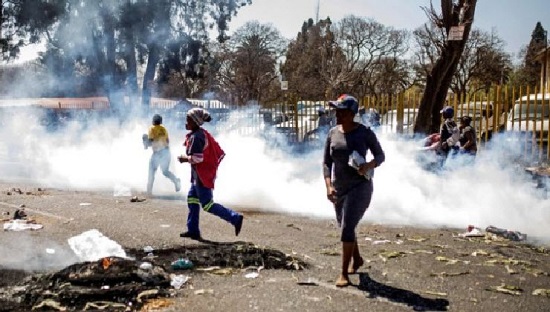
This whole new wave started in Pretoria. It was reported in the South African dailies that in the Central Business District of Pretoria, a South African taxi driver (Jabu Baloyi) witnessed a supposed Nigerian (according to many South Africans, Nigerians are known to sell drugs in the country) selling drugs to a young South African boy by the roadside. The taxi driver on his part, tired of the menace that the drug dealers, whom they believed are mostly foreign African nationals, are causing to the youth in the country, tried to stop the drug dealers from transacting business as usual with the young man. In the taxi driver’s attempt to do so, he was shot dead. Mind you, transport workers’ unions all over Africa are known to be aggressive and dare-devils. It is the same with the South Africa taxi driver associations and their members. The reported death of the taxi driver therefore incited the taxi drivers in Pretoria to go on the rampage with the plan to avenging the killing of their colleague and they started attacking businesses of Nigerians and later other foreign African nationals in the Pretoria region. Complaining about the attack on its member, the Chairperson of the Gauteng Taxi Association, Abner Tsebe, was reported saying, “There are allegations that the police were there when one of the drivers was shot dead. Instead of arresting the perpetrator, the police rescued the perpetrator.” He was complaining about the security agencies not protecting them, the taxi drivers. The attack on businesses, burning of shops however helped riff-raffs in society to get access to shops and private property of these foreign nationals to loot. The foreign nationals being helpless also could not stand being persecuted and their lives wasted over the offence of a single man. They, as a form of self-defence, also took to dangerous weapons to protect themselves. And this is how we get the craziness happening presently in Pretoria.
Johannesburg, on its own, was an entirely different story. It is no news that there is perceived suspicion of other Africans, especially Nigerians, by the black South Africans. Whether this perceived suspicion is founded or not is a topic for another day. What I am sure of is that, this is very common with human societies, it is still evident in Western world today. Many Western Europeans still have a perceived suspicion of folk from East Europe, Asia and Africa. Many White Americans still get an air of inconvenience around Black Americans and Latinos. Even in Nigeria, many Hausa still look at the Igbo with a side-eye. Many Igbo still think of an Hausa man as a lunatic killer. Even the Lagos State Government recently arrested some young men with their motorcyclists from Jigawa State coming into the state because they suspected them as they are Hausa and have lots of bikes with them. So, with this riot going on in Pretoria, Johannesburg was expectedly charged. Unfortunately, a few days later, there was a fire incident in a building in the foreign national-dominated area of Johannesburg called Hillbrow. The fire incident claimed three lives and a fourth person is still hospitalised, according to reports. The charged populace therefore used this incident as an opportunity to start the Johannesburg round of violence. Looting shops, attacking people and burning property.
Now with all these happenings, we started seeing pictures and videos from South Africa in every part of Africa and the world. People got aggrieved and in countries like Zambia and Nigeria, the populace started attacking perceived South African businesses as a form of reprisals to avenge the blood of their brothers and sisters killed in South Africa. A social media war began between artistes from South Africa and the rest of Africa. The continent has been thrown into darkness and sorrow. It is noteworthy, however, that some of the videos on the Internet are from the 2013 xenophobic attacks in the same South Africa and not from this recent wave of attacks. The next question was, what are the South African Government and people doing about this? Let it be known that as these xenophobic attacks are going on, the nation is also going through a dark period of some sort of femicide. Where females are being raped and killed by gangs. There seems to be a surge of this femicide happening the same time the xenophobic attacks are occurring. The streets of major South African cities don’t feel safe even for the citizens. The South African President, Cyril Ramaphosa, was silent on all these happenings. It is shocking to say the least! He addressed the country for the first time over these issues on September 5, talked about the femicide and briefly mentioned the xenophobic attacks. This is saddening! The African Union has also been deadly silent. All this drives home the fact that we have a big dearth of leadership on the continent.
My advice for my South African brothers and sisters however, is to learn from the Germans how the people managed a similar situation in Chemnitz last year. A big majority of Germans rallied round, organising anti-racism concerts thereby overpowering the small pockets of aggressive, angered Germans who thought they needed to kill every foreigner for the death of a fellow German caused by one foreigner.
For other African nationals like my fellow Nigerians, a pocket of people breaking South African businesses in Nigeria shows that we are not better than the riff-raffs that started this all in South Africa. Breaking into ShopRite, MTN and others will do more harm to us and very little will be felt by South Africa. The majority of shareholders in these companies are Nigerians. The bulk of their staff are Nigerians and the services they render are for Nigerians. The absence of all these businesses will therefore create a void to be felt primarily by Nigerians.
And for the future, it’s either as a human race we learn to drop these prejudices we have for people we don’t see as one of our own or we just wait for the next wave of riots. It might be xenophobia, racism, religious riots, election riots or any other name you may decide to call it. But it will come!
Abdulsalam is a scientific researcher at the Friedrich Schiller University in Jena, Germany
[Punch]
