



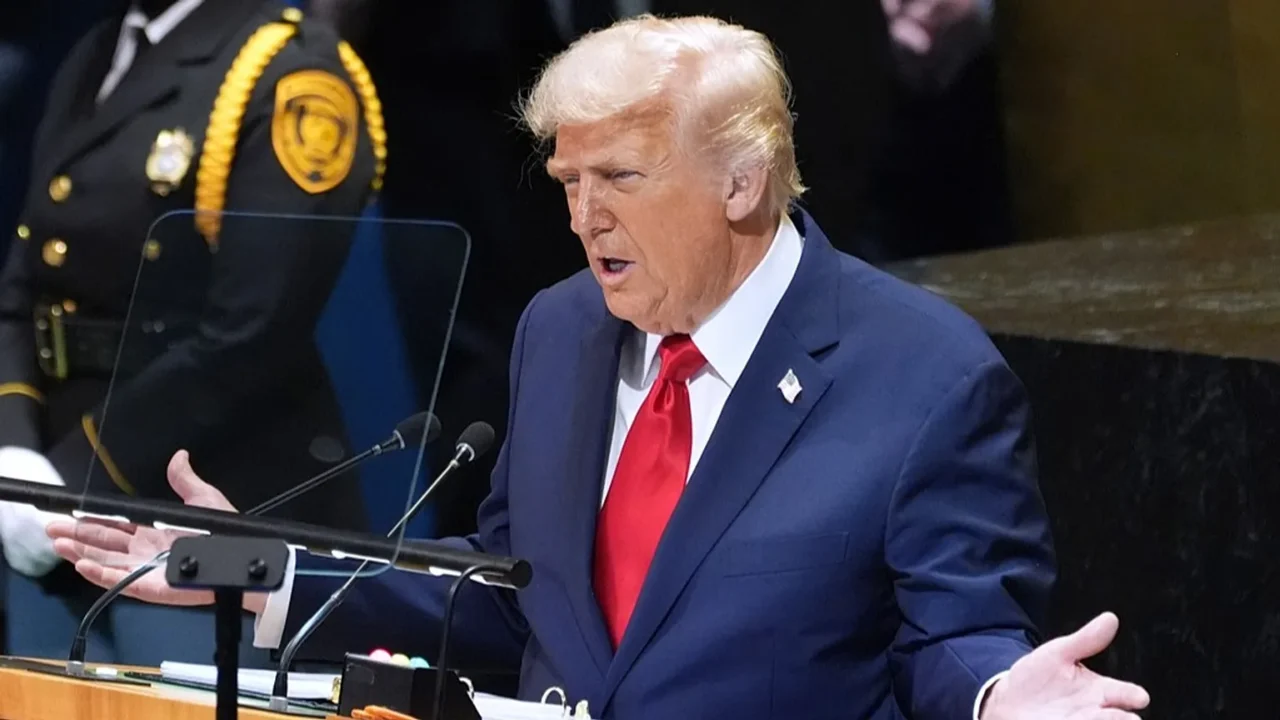
When President Donald J. Trump took the podium at the 2025 United Nations General Assembly, the world braced itself for fireworks. True to form, Trump delivered a speech that was as blunt as it was provocative. He denounced the UN as “feckless and pernicious,” accused it of corruption, and questioned the relevance of the institution in solving the real problems of ordinary people.
To some, this was classic Trump — a populist leader railing against bureaucracy and global elites. To others, it was a dangerous rejection of multilateralism, the bedrock of international cooperation since World War II. Regardless of perspective, the speech has reignited debates about the role of the UN, the legitimacy of global governance, and the future of U.S. leadership in the world.
A President at Odds with Global Consensus
Trump’s presidency has always been marked by skepticism of global institutions. From the Paris Climate Accord to the World Health Organization, his administration has questioned whether international bodies serve U.S. interests or simply drain American resources.
At the UNGA, he took that skepticism to new heights. By calling the UN corrupt and irrelevant, Trump directly challenged the idea that global problems require global solutions. He argued instead for a return to national sovereignty, bilateral deals, and “America First” policies.
This position resonates with his political base at home, many of whom feel that international agreements have undermined American jobs, borders, and values. But on the global stage, it raises a critical question: If the U.S. withdraws from leading multilateralism, who fills the void?
Why Trump’s Message Resonates
It would be a mistake to dismiss Trump’s speech as mere political theater. His words tap into real frustrations felt far beyond America’s borders:
-
Bureaucracy Fatigue: Many view the UN as slow, wasteful, and ineffective in crises like Syria, Gaza, or the Sahel.
-
Imbalance of Power: Smaller nations often feel sidelined by the dominance of the Security Council’s five permanent members.
-
Unequal Benefits: Citizens in both rich and poor countries question whether global institutions actually improve their lives.
-
Business Burden: Corporations, especially in heavily regulated industries, bristle at multilateral treaties that impose uniform standards without flexibility.
Trump’s blunt attack resonates because he verbalizes doubts that have simmered for decades. He frames himself not as a disruptor, but as a truth-teller challenging a broken system.
The Risks of Trump’s Approach
Yet there is a danger in conflating critique with demolition. Rejecting multilateralism altogether carries serious risks.
-
Global Fragmentation
If the UN loses legitimacy, nations may retreat into competing blocs. Instead of cooperation, the world could face heightened rivalry between the U.S., China, Russia, and regional powers. -
Economic Instability
Businesses depend on predictable, rule-based trade. Without multilateral frameworks, disputes multiply, compliance costs rise, and investment confidence shrinks. -
Silencing Developing Nations
Whatever its flaws, the UN provides countries like Nigeria with a voice in global affairs. If institutions like the UN collapse, Africa and the Global South risk losing the only platforms where their concerns are heard. -
Security Vacuum
From counterterrorism to peacekeeping, multilateral coordination remains vital. Without it, fragile regions could descend further into chaos.
Trump’s critique highlights real problems, but his rhetoric risks undermining solutions before they can be reformed.
Nigeria’s Stake in Multilateralism
For Nigeria, Trump’s speech is not distant rhetoric; it has direct implications. As Africa’s largest democracy and economy, Nigeria depends heavily on global cooperation:
-
Peace and Security: Nigeria contributes troops to UN peacekeeping but also relies on UN frameworks to address Boko Haram, piracy, and regional insurgencies.
-
Development Assistance: UN agencies fund health, education, and humanitarian projects across Nigeria.
-
Climate Finance: With floods displacing thousands and desertification threatening livelihoods, Nigeria needs access to climate adaptation funds channeled through multilateral platforms.
-
Diplomatic Ambitions: Nigeria’s push for a permanent UN Security Council seat assumes the institution will remain central. If Trump’s vision prevails, such ambitions could lose relevance.
In other words, multilateralism amplifies Nigeria’s voice. Its erosion would diminish Nigeria’s influence, leaving it at the mercy of bilateral deals dominated by stronger powers.
Implications for Businesses
Businesses, both Nigerian and global, cannot ignore Trump’s posture. A weakened UN and declining multilateralism could reshape the economic landscape.
-
Trade Disruptions: Without global trade rules, businesses face a patchwork of bilateral agreements, raising uncertainty.
-
Investment Risks: Political fragmentation deters long-term investment, especially in emerging markets like Nigeria.
-
Compliance Burdens: Multinationals could face inconsistent standards across countries, driving up costs.
-
Opportunity for Adaptation: On the flip side, nimble firms that adapt quickly to bilateral frameworks may gain competitive advantage.
For Nigerian entrepreneurs, especially exporters, the shift away from multilateral rules could mean tougher entry into global markets and higher transaction costs.
Implications for Governments
Governments worldwide must adapt to the possibility of a weakened multilateral system. For Nigeria and other developing nations:
-
Stronger Regionalism: ECOWAS and the African Union may become more important as global institutions falter.
-
Bilateral Diplomacy: Countries must sharpen their ability to negotiate directly with major powers, a skill that requires strategic leadership and preparation.
-
Domestic Stability: With external safety nets eroding, governments must create internal resilience through fiscal responsibility and institutional reforms.
Nigeria’s leaders cannot passively hope that global institutions remain intact. They must prepare for a world where bilateral strength matters as much as multilateral visibility.
The Citizen’s View
For ordinary Nigerians, Trump’s speech may feel remote. Yet its ripple effects could touch daily life:
-
Aid and Relief: Reduced UN influence could mean less international support during floods, famines, or epidemics.
-
Jobs and Prices: Instability in global trade affects fuel costs, food prices, and employment opportunities.
-
Migration: With less global coordination, migration policies could harden, affecting millions of Nigerians abroad.
The debate over multilateralism is ultimately about whether citizens experience greater security, prosperity, and dignity in a globalized world.
Reform, Not Rejection
Here lies the critical point: Trump is right that the UN needs reform. But reform must not be mistaken for rejection.
-
Security Council Expansion: Including African and Latin American seats would make the Council more representative.
-
Streamlined Bureaucracy: Cutting waste and focusing on measurable outcomes would rebuild credibility.
-
Private Sector Engagement: Leveraging business expertise could enhance impact in areas like technology, health, and climate.
-
Stronger Accountability: Transparent oversight would combat corruption and inefficiency.
The UN can be rebuilt into a leaner, more responsive body — but only if nations push for reform instead of walking away.
A Test of Leadership
Trump’s speech forces the world to confront uncomfortable truths. The UN is flawed. Global institutions often fail. Citizens are disillusioned. But the solution cannot be a wholesale retreat into nationalism.
The test of leadership, for the U.S., Nigeria, and others, is whether they can channel frustration into constructive reform. True statesmanship lies not in burning institutions down but in remaking them fit for purpose in a new century.
For Nigeria, this is an opportunity. By aligning with other developing nations, it can lead calls for a reformed multilateralism that is more just, more efficient, and more inclusive.
Conclusion
President Trump’s attack on the UN has sparked global alarm. Yet beneath the fiery rhetoric lies a real challenge: Will nations reform the global order or allow it to crumble?
For Nigeria, the stakes are existential. Its economy, diplomacy, and security all depend on strong multilateral systems. For businesses, stability and predictable trade rules are vital. For citizens, the impact of global cooperation is felt in prices, aid, and opportunity.
Multilateralism may be imperfect, but it remains essential. Trump’s speech is a warning, but it could also be a turning point — if the world chooses renewal over retreat.
