


Close Menu
FridayPosts
    Facebook X (Twitter) Instagram YouTube
    Trending
    • How to Build Daily Focus as a Leader
    • 7 Leadership Mistakes That Are Secretly Destroying Your Team’s Performance
    • Business Environmental Scanning: A Strategic Tool for Nigerian Companies
    • Competition Awareness for Sustainable Growth: Insights for Nigerian Businesses
    • The Complete Courtship Guide: Rules, Tips, and Principles for Building a Strong Relationship
    • Building a Covenant Relationship: 10 Rules That Actually Work
    • Top 100 Notable Leadership Experts in the World – From John C. Maxwell to A. Joshua Adedeji to Seth Godin
    • The Battle for 6G: How Countries Are Competing for the Next Generation of Mobile Networks
    • Home
    • AAJ Consulting
      • Abuja Leadership Coach
    • Expert Insights
      • Business
      • Faith
      • Leadership
      • Lifestyle
      • Health
      • Personality of the Week
      • Relationships
      • Small Business
      • Technology
    • Best Classified Ads
    • Buy Books
    • Pay4Books
    • Sell Online
    • Podcast
    • Shop
    • More
      • About Us
      • Advertise With Us
      • Contact Us
      • Be A Contributor
      • Send News Tips
      • Privacy
      • Terms
      • EBooks
      • My account
        • Cart
    Facebook X (Twitter) Instagram YouTube
    FridayPostsFridayPosts
    Subscribe
    Tuesday, March 3
    • Home
    • AAJ Consulting
      • Abuja Leadership Coach
    • Expert Insights
      • Business
      • Faith
      • Leadership
      • Lifestyle
      • Health
      • Personality of the Week
      • Relationships
      • Small Business
      • Technology
    • Best Classified Ads
    • Buy Books
    • Pay4Books
    • Sell Online
    • Podcast
    • Shop
    • More
      • About Us
      • Advertise With Us
      • Contact Us
      • Be A Contributor
      • Send News Tips
      • Privacy
      • Terms
      • EBooks
      • My account
        • Cart
    FridayPosts
    Home»Governance, Policy & Public Sector Transformation

    Abolition of the Slave Trade: A Nigeria Perspective

    A. Joshua AdedejiBy A. Joshua AdedejiJuly 6, 2018 Governance, Policy & Public Sector Transformation No Comments4 Mins Read
    Share
    Facebook Twitter LinkedIn Pinterest Email

    In 1807 the Houses of Parliament in London enacted legislation prohibiting British subjects from participating in the slave trade. Indirectly, this legislation was one of the reasons for the collapse of Oyo. Britain withdrew from the slave trade while it was the major transporter of slaves to the Americas. Furthermore, the French had been knocked out of the trade during the French Revolution beginning in 1789 and by the Napoleonic wars of the first fifteen years of the nineteenth century. Between them, the French and the British had purchased a majority of the slaves sold from the ports of Oyo. The commercial uncertainty that followed the disappearance of the major purchasers of slaves unsettled the economy of Oyo. Ironically, the political troubles in Oyo came to a head after 1817, when the transatlantic market for slaves once again boomed. Rather than supplying slaves from other areas, however, Oyo itself became the source of slaves.

    British legislation forbade ships under British registry to engage in the slave trade, but the restriction was applied generally to all flags and was intended to shut down all traffic in slaves coming out of West African ports. Other countries more or less hesitantly followed the British lead. The United States, for example, also prohibited the slave trade in 1807 (Denmark actually was the first country to declare the trade illegal in 1792). Attitudes changed slowly, however, and not all countries cooperated in controlling the activity of their merchant ships. American ships, for instance, were notorious for evading the prohibition and going unpunished under United States law. It should be noted, moreover, that the abolition movement concentrated on the transatlantic trade for more than five decades before eventually becoming a full-fledged attack on slave trading within Africa itself.

    The Royal Navy maintained a prevention squadron to blockade the coast, and a permanent station was established at the Spanish colony of Fernando Po, off the Nigerian coast, with responsibility for patrolling the West African coast. For several decades, as much as one-sixth of all British warships were assigned to this mission, and a squadron was maintained at Fernando Po from 1827 until 1844. Slaves rescued at sea were usually taken to Sierra Leone, where they were released. British naval crews were permitted to divide prize money from the sale of captured slave ships. Apprehended slave runners were tried by naval courts and were liable to capital punishment if found guilty.

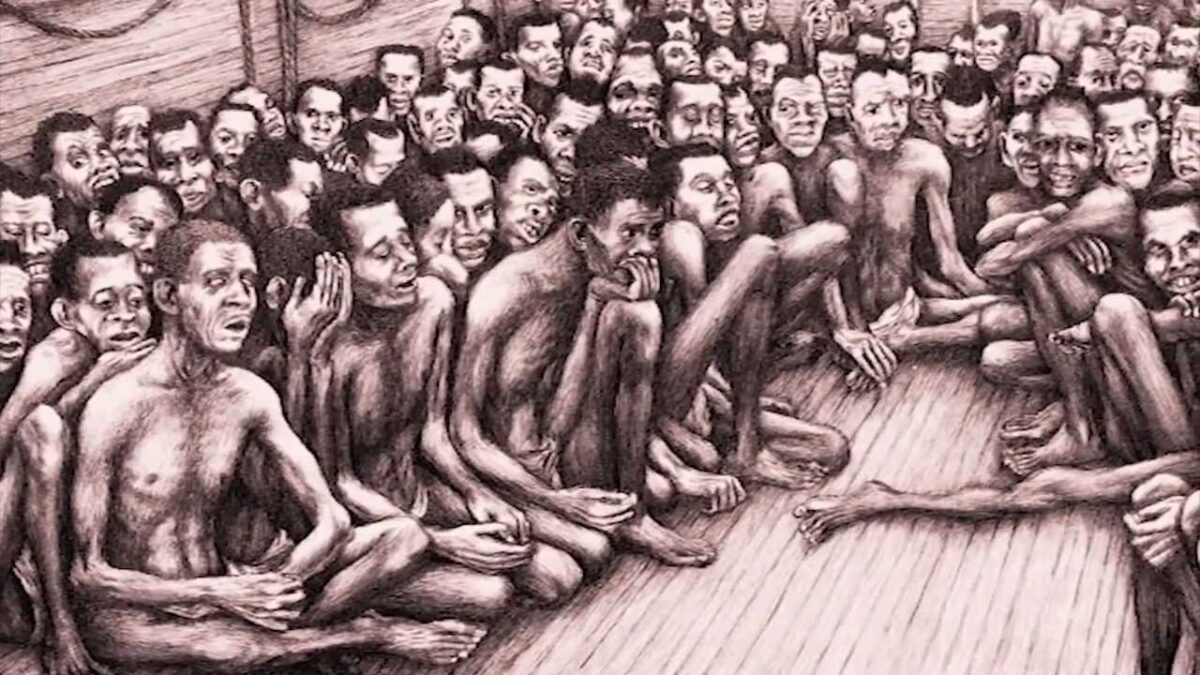
    Still, a lively slave trade to the Americas continued into the 1860s. The demands of Cuba and Brazil were met by a flood of captives taken in wars among the Yoruba and shipped from Lagos, while the Aro continued to supply the delta ports with slave exports through the 1830s. Despite the British blockade, almost 1 million slaves were exported from Nigeria in the nineteenth century. The risk involved in running the British blockade obviously made profits all the greater on delivery.

    The campaign to eradicate the slave trade and substitute for it trade in other commodities increasingly resulted in British intervention in the internal affairs of the Nigerian region during the nineteenth century and ultimately led to the decision to assume jurisdiction over the coastal area. Suppression of the slave trade and issues related to slavery remained at the forefront of British dealings with local states and societies for the rest of the nineteenth century and even into the twentieth century.

    Lagos, where the British concentrated activities after 1851, had been founded as a colony of Benin in about 1700. A long dynastic struggle, which became entwined with the struggle against the slave trade, resulted in the overthrow of the reigning oba and the renunciation of a treaty with Britain to curtail the slave trade. Britain was determined to halt the traffic in slaves fed by the Yoruba wars, and responded to this frustration by annexing the port of Lagos in 1861. Thereafter, Britain gradually extended its control along the coast. British intervention became more insistent in the 1870s and 1880s as a result of pressure from missionaries and liberated slaves returning from Sierra Leone. There was also the necessity of protecting commerce disrupted by the fighting. The method of dealing with these problems was to dictate treaties that inevitably led to further annexations.


    Source: U.S. Library of Congress

    Post Views: 107

    Comments

    comments

    A Nigerian Perspective Abolition of the Slave Trade Refugee Migration Refugees and Slavery Slave Trade
    A. Joshua Adedeji
    • Website
    • Facebook
    • X (Twitter)
    • Instagram
    • LinkedIn

    CEO at AAJ Consulting Limited; President, Kingdom Pathwalkers Ministries & Centre for New Dimension Leadership I am committed to bringing transformative CHANGE to people, spaces and places. I see the best in people and opportunities and I work to help individuals and organizations see the best in themselves, even when deeply buried in past rejections, omissions, failures and mistakes.

    Keep Reading

    Restructuring as the Foundation for Nigeria’s Sustainable Development

    Nigeria’s Call for a New World Order on Debt: Beyond Words at the United Nations

    Nigeria’s Bid for a UN Security Council Seat: What Shettima’s Push Means for Africa, Business, and Global Diplomacy

    President Tinubu Ends State of Emergency in Rivers State: What Happened, Why, and What’s Next

    The People’s Economy: Rethinking Growth, Equity, and Innovation for a Prosperous Future

    From Policy to Progress: How Strategic Governance Transforms Nations

    Add A Comment
    Leave A Reply Cancel Reply

    Sponsored Ads
    Products
    • You Are A Prophecy To Be Fulfilled: How to Recognize, Receive, and Realize God’s Purpose for Your Life - Revised & Expanded Edition (Hardcover) You Are A Prophecy To Be Fulfilled: How to Recognize, Receive, and Realize God’s Purpose for Your Life - Revised & Expanded Edition (Hardcover) ₦30,000.00 Original price was: ₦30,000.00.₦28,390.00Current price is: ₦28,390.00.
    • You Are A Prophecy To Be Fulfilled: How to Recognize, Receive, and Realize God’s Purpose for Your Life - Revised & Expanded Edition (Paperback) You Are A Prophecy To Be Fulfilled: How to Recognize, Receive, and Realize God’s Purpose for Your Life - Revised & Expanded Edition (Paperback) ₦19,000.00 Original price was: ₦19,000.00.₦16,430.00Current price is: ₦16,430.00.
    • Phases in Spiritual Leadership: How God Shapes Ordinary Believers into Trusted Kingdom Leaders Through a Spiritual Process - Second, Revised & Expanded Edition (Hardcover) Phases in Spiritual Leadership: How God Shapes Ordinary Believers into Trusted Kingdom Leaders Through a Spiritual Process - Second, Revised & Expanded Edition (Hardcover) ₦28,000.00 Original price was: ₦28,000.00.₦24,817.00Current price is: ₦24,817.00.
    • Phases in Spiritual Leadership: How God Shapes Ordinary Believers into Trusted Kingdom Leaders Through a Spiritual Process - Second, Revised & Expanded Edition (Paperback) Phases in Spiritual Leadership: How God Shapes Ordinary Believers into Trusted Kingdom Leaders Through a Spiritual Process - Second, Revised & Expanded Edition (Paperback) ₦19,500.00 Original price was: ₦19,500.00.₦16,430.00Current price is: ₦16,430.00.
    • The Major Baton Transferred: Rediscovering God’s Kingdom Mandate for Dominion and Influence (Hardcover) The Major Baton Transferred: Rediscovering God’s Kingdom Mandate for Dominion and Influence (Hardcover) ₦22,000.00 Original price was: ₦22,000.00.₦18,450.00Current price is: ₦18,450.00.
    JUST IN

    How to Build Daily Focus as a Leader

    February 17, 2026

    7 Leadership Mistakes That Are Secretly Destroying Your Team’s Performance

    February 17, 2026

    Business Environmental Scanning: A Strategic Tool for Nigerian Companies

    October 1, 2025

    Competition Awareness for Sustainable Growth: Insights for Nigerian Businesses

    October 1, 2025

    Top 100 Notable Leadership Experts in the World – From John C. Maxwell to A. Joshua Adedeji to Seth Godin

    September 27, 2025
    • NIGERIA
    • POPULAR POSTS

    Be a Leader Indeed, the One that Inspires!

    July 15, 2025

    Enroll ‘Total Christian Certification’ Course: Transform Your Faith, Lead with Purpose, Live Fully in Christ | Hubpile | KPA | KPM

    April 6, 2025

    Petrol Price Hike: NLC and Atiku Warn of Dire Consequences as Nigerians Face Economic Hardship

    September 9, 2024

    Small Investment, Big Returns: A Guide to Launching a Business in Nigeria with 100k Naira or Less

    August 29, 2024

    Uzza, The Ark of Covenant And The Tale of Sisters Nicki And Tasha

    August 31, 2017

    Tips for Newly Weds: How to Make a Beautiful Home

    January 21, 2017

    Towards Your Destiny: You May Not Look It Now!

    September 6, 2016

    Death Sentence for Kidnappers in Nigeria: What Were Senators Waiting For?

    May 5, 2016
    Podcast This Week

    Subscribe to Updates

    Get the latest creative news from Fridayposts.com about politics, leadership and business.

    FOLLOW US
    • Facebook
    • Twitter
    • YouTube
    • WhatsApp
    Exchange Rate

    Exchange Rate USD: Tue, 3 Mar.

    Type above and press Enter to search. Press Esc to cancel.