


Close Menu
FridayPosts
    Facebook X (Twitter) Instagram YouTube
    Trending
    • Tinubu’s Nigeria So Far: Ambition, Reform, and the Test of Governance
    • Why Nigerian Politicians Defect: The Real Cost to Democracy, Governance, and Voter Trust
    • Impact of Iran’s Fuel Price Changes on Nigeria’s Energy Sector
    • Speak Without Fear: Master Public Speaking Confidence in Nigeria
    • How to Build Daily Focus as a Leader
    • 7 Leadership Mistakes That Are Secretly Destroying Your Team’s Performance
    • Business Environmental Scanning: A Strategic Tool for Nigerian Companies
    • Competition Awareness for Sustainable Growth: Insights for Nigerian Businesses
    • Home
    • AAJ Consulting
      • Abuja Leadership Coach
    • Expert Insights
      • Business
      • Faith
      • Leadership
      • Lifestyle
      • Health
      • Personality of the Week
      • Relationships
      • Small Business
      • Technology
    • Best Classified Ads
    • Buy Books
    • Pay4Books
    • Sell Online
    • Podcast
    • Shop
    • More
      • About Us
      • Advertise With Us
      • Contact Us
      • Be A Contributor
      • Send News Tips
      • Privacy
      • Terms
      • EBooks
      • My account
        • Cart
    Facebook X (Twitter) Instagram YouTube
    FridayPostsFridayPosts
    Subscribe
    Wednesday, March 25
    • Home
    • AAJ Consulting
      • Abuja Leadership Coach
    • Expert Insights
      • Business
      • Faith
      • Leadership
      • Lifestyle
      • Health
      • Personality of the Week
      • Relationships
      • Small Business
      • Technology
    • Best Classified Ads
    • Buy Books
    • Pay4Books
    • Sell Online
    • Podcast
    • Shop
    • More
      • About Us
      • Advertise With Us
      • Contact Us
      • Be A Contributor
      • Send News Tips
      • Privacy
      • Terms
      • EBooks
      • My account
        • Cart
    FridayPosts
    Home»Health

    ‘Only 8,145,416 Nigerians are fully vaccinated against COVID-19’

    Chief EditorBy Chief EditorFebruary 28, 2022 Health No Comments11 Mins Read
    Share
    Facebook Twitter LinkedIn Pinterest Email

    • NPHCDA says 4,317,621 tests have been conducted with 254,428 confirmed cases
    • Faisal charts path on how country can prepare for next pandemic

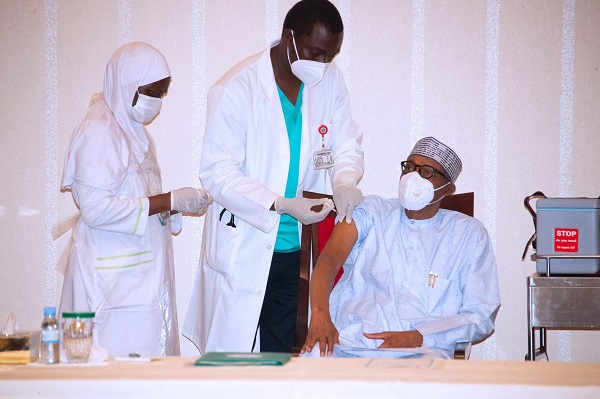
    Two years after the first confirmed COVID-19 case in Nigeria and almost one year after the first shot of the vaccine was administered in the country, only four per cent of the 200 million population, that is 8,145,416 persons, have been fully vaccinated against the virus.

    Unfortunately, Nigeria and most developing countries could not achieve the World Health Organisation’s (WHO’s) set target for all countries to vaccinate 10 per cent of their populations by the end of September 2021 due to inequity in the distribution of vaccines.

    A consultant public health physician, an epidemiologist and Executive Director and Chief Executive Officer (CEO) of National Primary Health Care Development Agency (NPHCDA), Dr. Shuaib Faisal, told The Guardian yesterday: “As at the 25th of February 2022, 17,646,781 Nigerians have been vaccinated with the first dose while 8,145,416 Nigerians have received the second dose and are fully vaccinated. 682,108 Nigerians have received the booster dose. 4,317,621 tests have been conducted so far with 254,428 confirmed cases.”

    A breakdown of the figures showed 8,145,416 represent four per cent of Nigeria’s population of 200,000 people that have been fully vaccinated and 4,317,621 tests mean that only 2.1 per cent of Nigerians have been tested for COVID-19 two years after the first confirmed case.

    On the way forward, Faisal recommended: increasing investment in health care especially primary healthcare and strengthening the nation’s public health infrastructure. “This is not just the work of the Federal Government, we need State and Local actors stepping up to implement and prioritise policies and expenditures to health,” he said.

    Faisal said there should be continuous surveillance not just for COVID-19, using a community-based approach to tackle this pandemic by continuous engagement and sensitisation of the communities. The physician said there should be increased public-private partnership because health is for all.

    How can the country prepare for the next pandemic? The public health physician said: “Preparedness requires an ‘all of community approach’ that engages everyone in the planning stages, especially those from underserved or vulnerable populations. Building relationships now can improve access to information and resources when the next disaster strikes, helping ensure equity and agility in response. Continuous engagement of communities as we saw the proliferation of misinformation and distrust in science and health professionals and a subsequent lack of compliance with public health measure that can save lives and curtail a pandemic.

    “The public needs to be prepared to do its part: We at Federal have always put out a clear, consistent voice and an actionable message that reflects best practices based on sound science. We have been putting out messaging and data that clearly explain how each individual has an important role in curbing the pandemic – and that it might evolve as the pandemic unfolds over time. With the help of the media, the traditional, religious and community leaders we hope that these messages are regularly being conveyed to Nigerians. Nigerians also need to step up and realize that they each have a role in curtailing any pandemic.”

    On the lessons learnt, Faisal said COVID-19 came unexpectedly and hit not just Nigeria but the World. “No Country was prepared for it. The virus showed how vulnerable our health system was global. In Nigeria, it exposed the fragility of our primary health care structures. One good that came out of the pandemic for us though, was an opportunity for us to strengthen our primary health care system. We have been advocating for more investments in the primary health care space for a while, this pandemic brought to bear the reason why,” he said.

    The epidemiology said the country always has to prepare for unexpected increases in demand for services at the health facilities and this is why there is a need to strengthen the primary health care system. He said the Primary health care (PHC) is the first level of contact for individuals, the family, and the community with the national health system and it addresses the main health problems in the community, providing health promotion, preventive, curative and rehabilitative services accordingly. “Because this system was weak at the start of the pandemic, we saw our secondary and tertiary health facilities overburdened,” he said.

    Faisal said: “The pandemic is just as much a challenge to us on the national level, where many of the policy decisions in response to the pandemic are made, and at the State, local government and ward levels, where people decide on whether to comply with government guidelines and whether to support one another in times of need. It was challenging getting people to comply with the guidelines and protocols to protect themselves. It is still challenging getting people to get vaccinated to protect themselves. There is still vaccine hesitancy in the communities despite our efforts at advocacy, sensitization and intense communication. We are trying to protect the lives of our citizens and we have realized that in order for us to do that we must continuously engage the communities and provide them with the right information. The traditional, religious and community leaders play a key role in sensitizing and mobilizing communities and we are working with them to ensure everyone has the right information and access to vaccination.”

    He added: “The pandemic also showed us that one individual cannot succeed without the cooperation of others. One country cannot succeed without the cooperation of other countries. We cooperate at many different scales – Local, State and National. The COVID-19 pandemic highlights the danger of ignoring our interdependence and the importance of global cooperation. It shows us with crystal clarity that all of humanity is in the same boat. The virus can only be defeated in a region when it is defeated everywhere, it shows us the terrible folly of pretending that we can achieve security in isolation, within the borders of our nation, culture, class or religion. It has also shown us that our economies, political strata and social system function best when they come together to serve the need of the people. When the COVID-19 vaccines were first available, it was only focused on the Western countries; the countries that could afford to procure them. But they soon realized that if the vaccines were not made available to all countries, all efforts to eradicate the virus from the country would be futile. This pandemic has hinged on the slogan ‘No one is safe unless everyone is safe’.”

    Faisal said one great lesson learnt also is the need to increase public-private partnership in the Health sector. “At the National Primary Healthcare Development Agency, we have continuously been advocating for increased investment in the primary healthcare space. In order to achieve this we need not just the Government, but the private sector too. Yes, we understand that a businessman may only be interested in the profit or gains he would receive from investing and this is why we have not seen much investment in primary health care, but we would like to state that a sustained investment in the primary health care system is an assurance of a better quality of health services provided not just now, but when next to an outbreak or pandemic hits. We need to start preparing more strategically for our future, the future of our children and the future of our loved ones. We have seen during this pandemic that public-private partnership works and takes us farther,” he said.

    How would you rate the country’s efforts to contain the pandemic? Faisal said: “Just like the rest of the World, Nigeria was taken aback when the pandemic hit. But Nigeria had an advantage. Nigeria had been battling with the wild poliovirus; there was also the Ebola outbreak in 2014. There were structures already in place as a result of these experiences which the country quickly leveraged on as soon as the virus hit the Country. The moment cases were found outside China, The Nigerian Government quickly started putting measures in place to prepare for it. There was an increase in surveillance and testing.

    “Temporary testing centres and isolation centres were constructed to grapple with the increased demand. We saw an increase in public and private partnerships to ensure we had adequate testing capabilities. Nigeria’s health system is not where we ought to be, but every member of the health team at the National, State and Local level, stepped up and took on the responsibility of ensuring citizens are safe.

    “The moment the vaccines became available, the Federal Government was very persistent at the Global stage to ensure Nigeria has access to the vaccines. Nigeria was among the early African countries to get access and vaccination commenced immediately. Nigeria’s vaccination exercise has been rated the 4th best in the world by the World Health Organisation.”

    Faisal said the major challenge has been vaccine hesitancy. “We still have a lot of people in the communities who are not following the non-pharmaceutical measures of protection and have also refused to get vaccinated. There has been a lot of false information flying around. The moment we prove one is false other springs up. We are constantly engaging with the community, religious and traditional leaders to address their questions and concerns and to encourage them to sensitize the people, which they serve. We understand the fears, but we want to assure Nigerians that we are only doing our best to provide the best services and protect them from this pandemic. We have opened all our communication channels to allow people who have questions and concerns, access to only the right and verified information. The media also has an important role to play in ensuring that only true and verified information is shared with all Nigerians. Nigerians need to know what is available to them in order to protect them from severe disease, hospitalization and death from this virus,” he said.

    The public health physician said another challenge is non-adherence to government guidelines and protocols. “It has been really challenging getting people to comply. We would never have thought that getting people to not just look out for themselves but also for their loved ones, friends and colleagues would be this tough, but that is what we have seen. Non-adherence to the non-pharmaceutical measures of prevention has been a factor in the increase in spread. Continuous sensitization and communication are still in place to ensure people are kept safe,” he said.

    The NPHCDA boss said another challenge is the inadequate human resources at the primary health care level. Faisal said due to years of insufficient investment in the primary health care level, the fragility of the system became more exposed during this pandemic. “We have been working with the few we have to roll out the vaccination exercise. At the National level, we also had to hire Adhoc staff and set up temporary posts, mobile vaccination sites and mass vaccination sites in order to increase access to the vaccines to all Nigerians. We hope in the coming days the public, private and global sector would see that there is a huge need to invest in the primary health care space,” he said.

    On what ways the will declaration of Nigeria as a COVID 19 vaccine manufacturing destination impact on the healthcare delivery system, Faisal said all countries need the COVID-19 vaccines but not all countries are able to produce them.

    He said ensuring access to the medical equipment and related goods needed to fight COVID-19 was an immediate challenge during the first wave of the pandemic.

    Faisal said analysis revealed that no country was able to efficiently produce all the goods needed to fight the virus and this highlights the high degree of trade interdependencies between countries and that developing countries have depended on high-income countries for vaccines and though the demand is high the supply has been low.

    He said the safe and timely delivery of vaccines depends on the efficiency of the supply chains that underlie their production and distribution and if Nigeria becomes a vaccine manufacturing country, this will lead to an increase in the supply of the vaccines and also easier access for developing countries.

    Faisal further explained: “It will also shorten the transit time for the delivery of these vaccines. It also poses a huge opportunity for Nigeria, as it would also improve vaccine confidence among Nigerians as this is produced in their own country. It would also cut down the cost of procuring vaccines for the country and can lead to longer-term economic benefits and the production of other routine immunization vaccines. There would also be an improvement of trade between countries.”


    [GuardianNG]

    Post Views: 60

    Comments

    comments

    COVID-19 Nigerians Vaccination
    Chief Editor
    • Website
    • Facebook
    • X (Twitter)

    As the Editor-In-Chief at Fridayposts, my commitment is to make valuable, insightful and useful articles and latest news contents available to our highly esteemed readers and subscribers.

    Keep Reading

    Elevating Wellbeing: A Comprehensive Approach to Nutrition, Exercise, and Mental Resilience

    Harmonizing Health: The Interconnection of Nutrition, Exercise, and Well-being

    The Synergy of Nutrition and Movement: Building a Holistic Approach to Wellbeing

    Essential Guide to Achieving Optimal Health Through Diet and Fitness Strategies

    Transform Your Life: The Ultimate Guide to Achieving Optimal Health, Balanced Diet, and Effective Fitness Routines

    Nourishing the Body: Integrating Balanced Nutrition and Dynamic Movement for Optimal Health

    Add A Comment
    Leave A Reply Cancel Reply

    Sponsored Ads
    Products
    • You Are A Prophecy To Be Fulfilled: How to Recognize, Receive, and Realize God’s Purpose for Your Life - Revised & Expanded Edition (Hardcover) You Are A Prophecy To Be Fulfilled: How to Recognize, Receive, and Realize God’s Purpose for Your Life - Revised & Expanded Edition (Hardcover) ₦30,000.00 Original price was: ₦30,000.00.₦28,390.00Current price is: ₦28,390.00.
    • You Are A Prophecy To Be Fulfilled: How to Recognize, Receive, and Realize God’s Purpose for Your Life - Revised & Expanded Edition (Paperback) You Are A Prophecy To Be Fulfilled: How to Recognize, Receive, and Realize God’s Purpose for Your Life - Revised & Expanded Edition (Paperback) ₦19,000.00 Original price was: ₦19,000.00.₦16,430.00Current price is: ₦16,430.00.
    • Phases in Spiritual Leadership: How God Shapes Ordinary Believers into Trusted Kingdom Leaders Through a Spiritual Process - Second, Revised & Expanded Edition (Hardcover) Phases in Spiritual Leadership: How God Shapes Ordinary Believers into Trusted Kingdom Leaders Through a Spiritual Process - Second, Revised & Expanded Edition (Hardcover) ₦28,000.00 Original price was: ₦28,000.00.₦24,817.00Current price is: ₦24,817.00.
    • Phases in Spiritual Leadership: How God Shapes Ordinary Believers into Trusted Kingdom Leaders Through a Spiritual Process - Second, Revised & Expanded Edition (Paperback) Phases in Spiritual Leadership: How God Shapes Ordinary Believers into Trusted Kingdom Leaders Through a Spiritual Process - Second, Revised & Expanded Edition (Paperback) ₦19,500.00 Original price was: ₦19,500.00.₦16,430.00Current price is: ₦16,430.00.
    • The Major Baton Transferred: Rediscovering God’s Kingdom Mandate for Dominion and Influence (Hardcover) The Major Baton Transferred: Rediscovering God’s Kingdom Mandate for Dominion and Influence (Hardcover) ₦22,000.00 Original price was: ₦22,000.00.₦18,450.00Current price is: ₦18,450.00.
    JUST IN

    Tinubu’s Nigeria So Far: Ambition, Reform, and the Test of Governance

    March 21, 2026

    Why Nigerian Politicians Defect: The Real Cost to Democracy, Governance, and Voter Trust

    March 21, 2026

    Impact of Iran’s Fuel Price Changes on Nigeria’s Energy Sector

    March 21, 2026

    How to Build Daily Focus as a Leader

    February 17, 2026

    7 Leadership Mistakes That Are Secretly Destroying Your Team’s Performance

    February 17, 2026
    • NIGERIA
    • POPULAR POSTS

    Be a Leader Indeed, the One that Inspires!

    July 15, 2025

    Enroll ‘Total Christian Certification’ Course: Transform Your Faith, Lead with Purpose, Live Fully in Christ | Hubpile | KPA | KPM

    April 6, 2025

    Petrol Price Hike: NLC and Atiku Warn of Dire Consequences as Nigerians Face Economic Hardship

    September 9, 2024

    Small Investment, Big Returns: A Guide to Launching a Business in Nigeria with 100k Naira or Less

    August 29, 2024

    Uzza, The Ark of Covenant And The Tale of Sisters Nicki And Tasha

    August 31, 2017

    Tips for Newly Weds: How to Make a Beautiful Home

    January 21, 2017

    Towards Your Destiny: You May Not Look It Now!

    September 6, 2016

    Death Sentence for Kidnappers in Nigeria: What Were Senators Waiting For?

    May 5, 2016
    Podcast This Week

    Subscribe to Updates

    Get the latest creative news from Fridayposts.com about politics, leadership and business.

    FOLLOW US
    • Facebook
    • Twitter
    • YouTube
    • WhatsApp
    Exchange Rate

    Exchange Rate USD: Wed, 25 Mar.

    Type above and press Enter to search. Press Esc to cancel.