



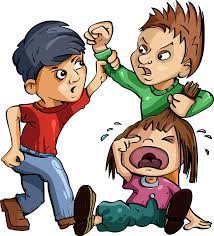
It is said that the best reaction to most of your child’s problem behavior is to ignore it or to walk away. That a large part of what we describe as bad behavior is actually normal behavior and a means through which children attempt to display traits such as autonomy, independent thinking and decision-making.
But your child’s behavior can quickly turn into a nightmare for you and your entire family, and it is not always easy to tell whether that behavior should be overlooked or dealt with firmly.
Depending on your child’s age, certain behavior is normal. For instance, even though tantrums can be a cause of concern in certain situations, they are normal and rather common in children between the ages of two and six, and they are simple a sign that your child is yet to learn to manage difficult emotions appropriately.
While older children rarely have tantrums and meltdowns, they engage in behavior such as arguing, eyerolling and slamming doors, which, hard as it may be for parents, is often an attempt to break away and to prove their independent thought.
As a general rule, attention-seeking behavior, which may involve your child seeking either negative or positive attention, should be ignored. Whining and tantrums are good examples of such behavior. Ignoring behavior such as back talk – depending on the type of back talk and on your child’s age – can also help reduce that behavior because removing an audience (you) eventually removes all the fun from this type of behavior.
When should you worry about your child’s problem behavior?
There is rarely cause for concern if your child’s behavior is age-appropriate and does not put them or others at risk. Their behavior also depends on your social and cultural settings, meaning that behavior that is considered as “appropriate” often varies depending on different parents and on different contexts.
That said, certain types of behavior are always a sign of a bigger underlying problem. In general, children with behavioral issues:
- React excessively to normal or minor situations
- Display negative behavior traits that tend to escalate over time
- Have frequent and long outbursts
- Are violent and destructive
- May appear withdrawn
- Indulge in behavior that is not age-appropriate, for instance sexual behaviors
- May have suicidal thoughts
- Have problems with both siblings and classmates and may frequently get into fights both at home and in school
Understanding child behavior problems: why do they happen?
Identifying the origins of your child’s problem behavior with certainty is not always an easy task. Bandura’s Bobo doll experiment – despite its shortcomings – showed that problem behaviors such as violence and aggression are learned. Other researchers disagree and argue that most of problem behavior is innate, and that a child’s early environment plays an important role in helping them overcome inappropriate behavior.
Irrespective of whether you believe that problematic behavior in your child is learned or innate, displays of problematic behavior often begins in childhood and they are often your child’s attempt to “gain power and control”.
Everyone agrees that your behavioral expectations – and the extent to which you hold your child accountable for their behavior – affects that behavior. The more you accept specific problem behavior, the more your child gets a sense of control. In other words, how you react to your child’s problem behavior can either reinforce it or put an end to it.
Many child behaviors can be ignored and your child will usually outgrow them without too much trouble. That said, there are certain problem behaviors that should never be ignored, especially because ignoring them can transform them into larger problems that will be much harder to deal with as your child grows older.
Here are five child behavior problems that should never be ignored
5 child behavioral problems that you should correct As Soon As Possible.
1) Dangerous behavior
You should always be concerned if your child displays dangerous behavior. This is behavior that includes self-injury, property destruction and aggression.
The first and most difficult step is accepting that your child is dangerous. It is normal to make excuses for their behavior but there is really no excuse for dangerous behavior that could affect your child and the people around them.
Dangerous behavior may include:
- Your child’s attempts to harm themselves or others with or without weapons
- Threats to harm themselves or others with or without weapons
- Extreme impulsiveness
- Setting fires
- Animal cruelty
- Intentional destruction of objects or property
2) Bullying is problem behavior that you should never ignore
No one wants their child to be bullied, but no one likes it when their child is the mean kid. While there is some amount of “meanness” in every child, most of your child’s displays of this behavior are often short-lived and harmless episodes. This could look like calling each other names, ignoring each other, or saying other mean or hurtful things.
But “harmless behavior” can quickly turn into bullying, and this tendency is far more widespread than we think. Several studies have reported that up to 53 per cent of kids have confessed to behavior that may be described as bullying. Such behavior includes:
- Verbal bullying. For instance, your child may engage in name-calling and/or make disrespectful comments about someone’s physical appearance
- Relational bullying. For instance, they may exclude someone from a group (games, lunch, sports, etc.)
- Physical bullying, i.e., anything that involves aggressive behavior
- Cyberbullying, i.e., bullying that occurs online
The available research suggests that children who bully have an underlying problem that even they themselves may not be aware of. Ignoring this type of behavior increases the chances of it recurring.
3) Aggressive or violent behavior
Just like dangerous behavior, violent and aggressive behavior in children is a cause for concern.
There are many ways in which your child can display violent behavior:
- Physically fighting others at home or in school
- Hurting or threatening to hurt others with or without weapons
- Intimidation
- Intentional destruction of property and things
- Frequent and explosive temper loss
Violent or aggressive behavior often stems from “something”. It can result from:
- Your child’s inability to express difficult emotions effectively
- Being physically, verbally or sexually abused themselves
- Your child’s exposure to a violent environment
- A stressful family environment
- Brain injuries
- Genes – many studies suggest that aggression is inborn but can either be made worse or improved by your child’s environment
Contrary to popular belief, few children “grow out of” violent or aggressive behavior, which is why it should never be minimized. The truth is, while violent behavior can be innate or learned (there is no consensus about what causes such behavior), children need to learn how to deal with frustration and threats in a more socially appropriate manner.
If your child displays violent behavior, please contact a qualified health professional who will organize a comprehensive assessment and give you the tools necessary to help them.
4) Verbally abusive language and disrespect is unacceptable negative behavior
Children get mouthy at times – that’s just the way it is. And this insolent behavior tends to get even worse in the pre-teen years. That said, there is a huge difference between language that is verbally abusive and that which is not.
Non-abusive insolent behavior can look like:
- Using a defiant tone when responding to you
- Quarrelsome responses when asked to do something
- Raising their voices to show their disagreement
- Condescending responses
Although dealing with the behaviors described above is always tricky, none of them can be defined as abusive. Verbally abusive language is demeaning and has only one objective: to hurt. Your child referring to you as a “fat cow” or as a “bitch” is verbally abusive and should never be tolerated.
The problem with verbally abusive behavior is that it tends to escalate. In other words, this behavior can start with less aggressive language when your child is young, but ignoring that behavior increases the chances that they will adopt more aggressive and hurtful language as they grow older.
5) Suicidal tendencies
Suicidal tendencies in young children are rare, but they exist. They are the 9th leading cause of death among 5- to 11-year-olds. They are more common among children who have psychological issues such as depression. Some of the common triggers include conflict with family and friends, being bullied, uncontrollable anger, copy-cat suicide, perceived humiliation, school-related stress and any other stressful event (death in your child’s entourage, changing schools and/or moving to a new area).
Here are several things to look out for:
- Self-inflicted injuries
- Frequent talk about death or death-related subjects
- Extreme social withdrawal
- Suicidal ideation, meaning suicide-related thoughts and plans
- Suicide attempts
- Suicide threats
- Unhabitual behavior such as giving away or getting rid of their possessions
Although having suicidal thoughts does not mean that your child will attempt suicide, such thoughts should always be taken seriously. They often reflect underlying issues (depression, extreme anxiety, head-related injuries, schizophrenia, etc.) that should be addressed. Minimizing suicidal tendencies helps reinforce them.
If your child has suicidal tendencies, please contact a health professional who will be able to determine whether the risk of suicide is high, uncover the underlying issue and propose the appropriate care (counseling, hospitalization, etc.).
